




Client: BreastScreen Victoria
Location: Melbourne, Victoria
The Challenge.
For an organisation at the frontline of women’s health, the head office of BreastScreen Victoria told a different story. The office hadn’t seen a meaningful update in over 25 years and for the team of 130 full-time and part-time employees, it was beyond time for a fresh fit-out. The existing office consisted of high cubicle walls, oversized fixed desks and rows of filing cabinets – an environment that no longer reflected how people actually worked. With the team working predominantly on laptops and operating in a largely hybrid model, the mismatch between the existing workspace and their workstyle was affecting engagement and productivity. Banks of desks sat empty. Collaboration was stifled. And for a modern, purpose-driven organisation, the space was out of step with the people and the work they were doing.
The Journey.
The re-fit brief was clear: replace the traditional setup and create a flexible, activity-based environment built for the way people actually work today. The existing meeting infrastructure was particularly limiting, with one large boardroom and a single small room seating around five people. For a hybrid workforce needing to connect, share content and collaborate across locations, it was no longer fit for purpose. Team members also lacked informal spaces to connect and recharge, and the fixed-desk layout left little room for the kind of spontaneous collaboration that drives innovation. The solution lay in rethinking the space entirely and finding the right partner to make it happen.
Rather than designing a one-size-fits-all office, each zone was purposefully considered to fit a specific pain point – from meeting rooms that make hybrid meetings feel seamless to warm social areas that give people a reason to come into the office. With the Business Interiors team leading the entire project from concept to completion – encompassing design, project management, full furniture supply and selected technology solutions, strong communication was critical from the outset. The Business Interiors team kept BreastScreen informed at every stage: what could be delivered before year’s end, what would follow in the New Year and how to navigate any shifts in direction or priority as they arose. As a government agency, there was an additional consideration woven throughout: sourcing Australian made furnishings wherever possible.
“Our key priorities included increasing collaboration, improving meeting room flexibility and refreshing the overall look and feel to make the office somewhere people genuinely wanted to be.”
Luke Neill, Chief Operating & Innovation Officer at BreastScreen Victoria.
The Solution.
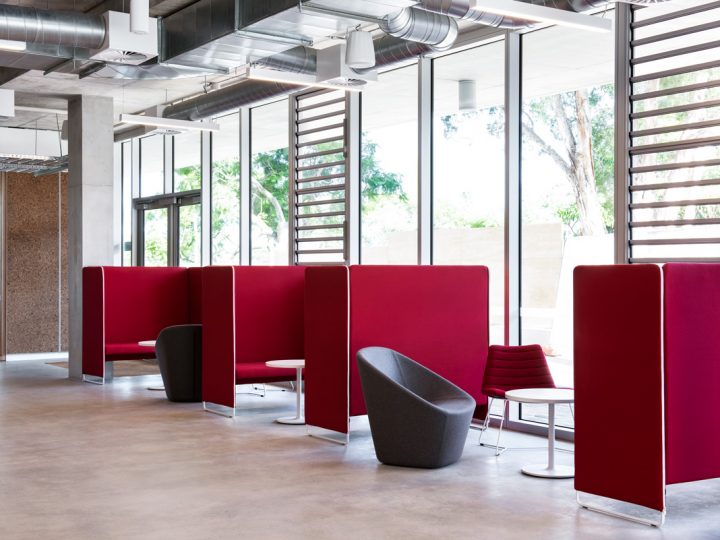
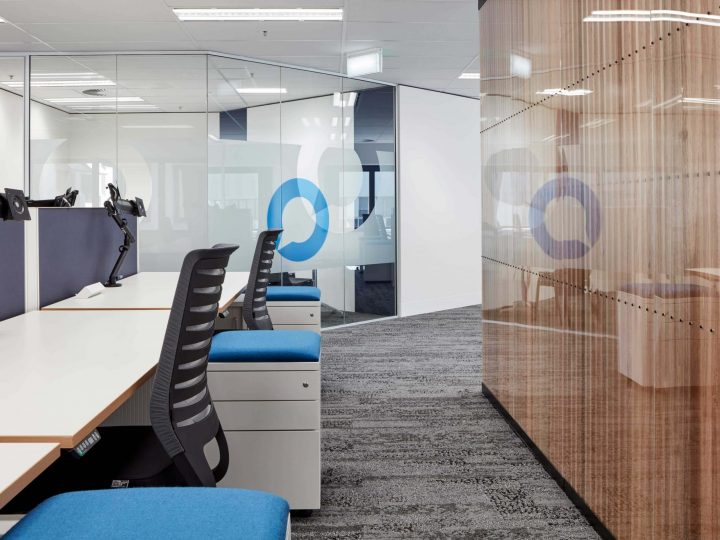
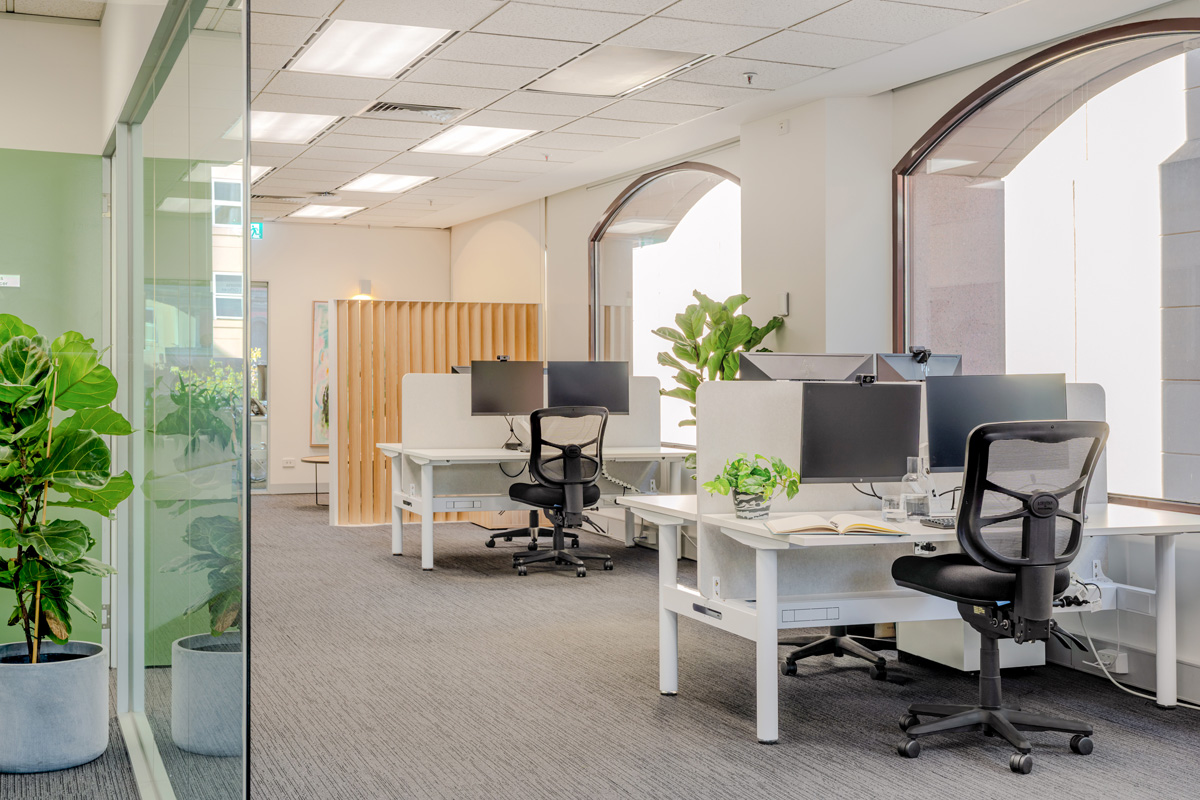
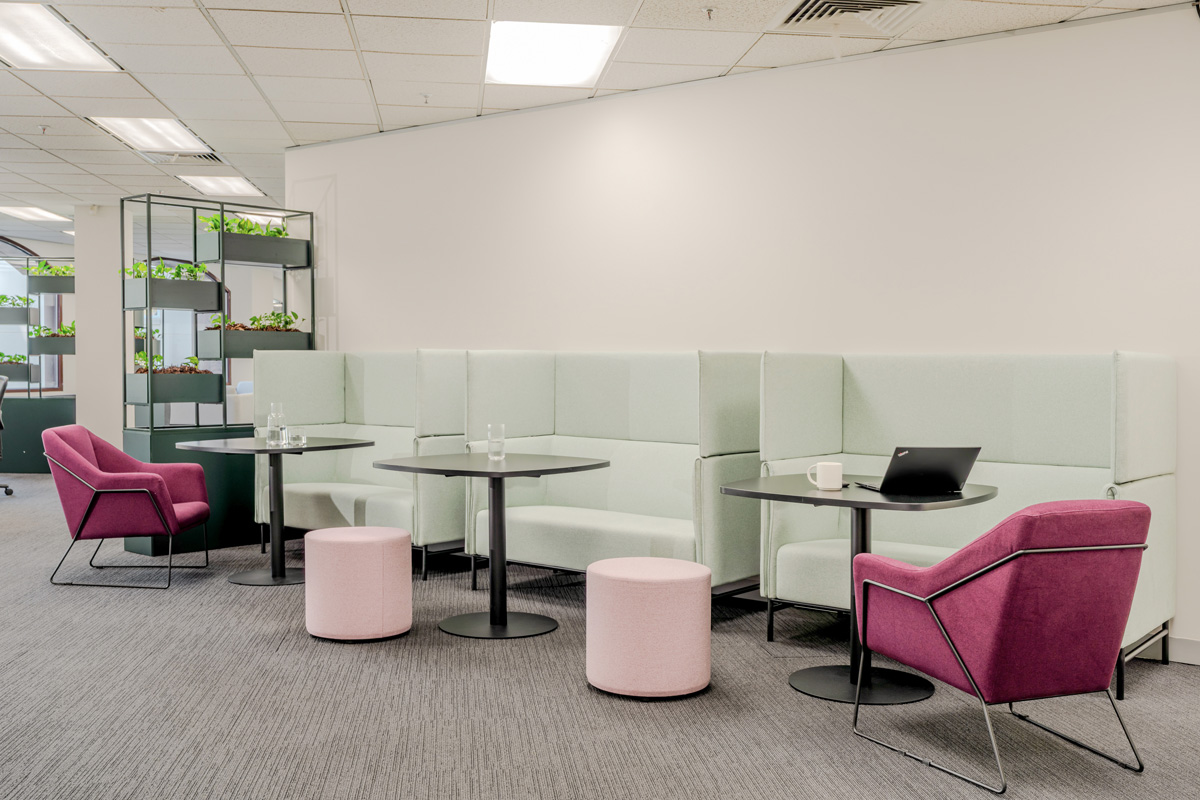
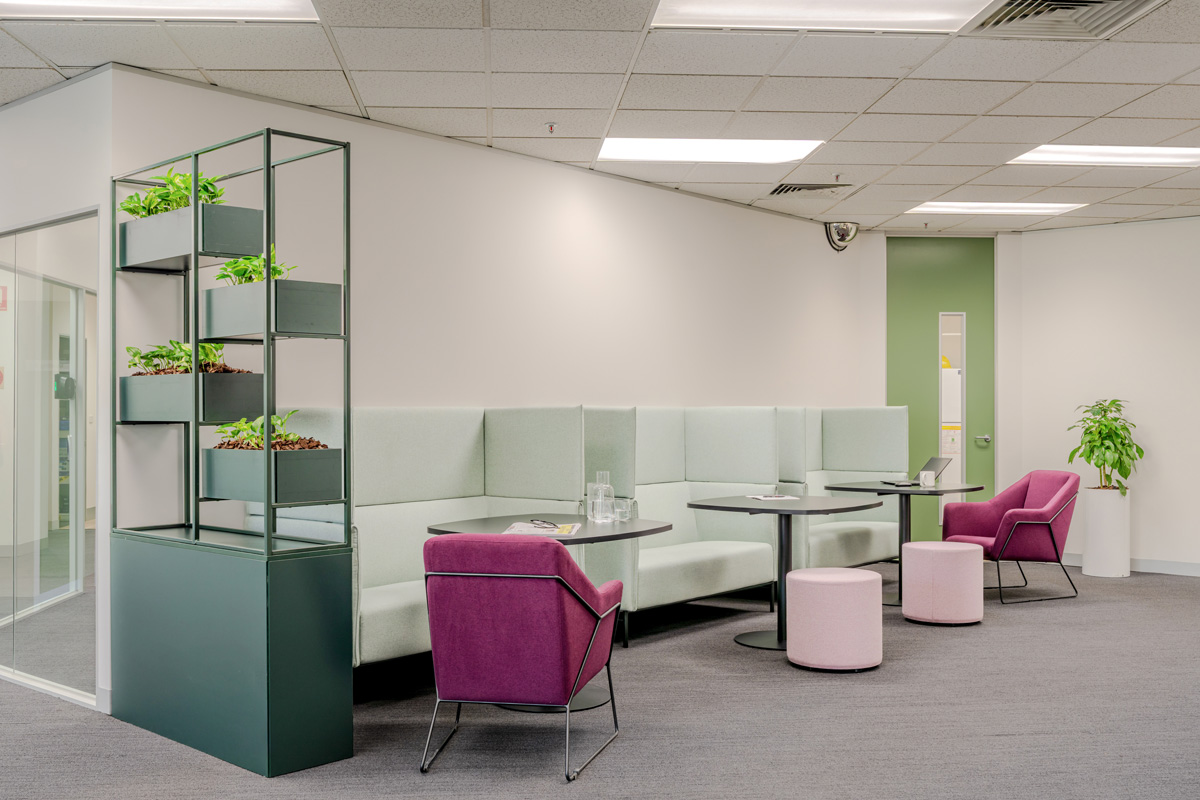
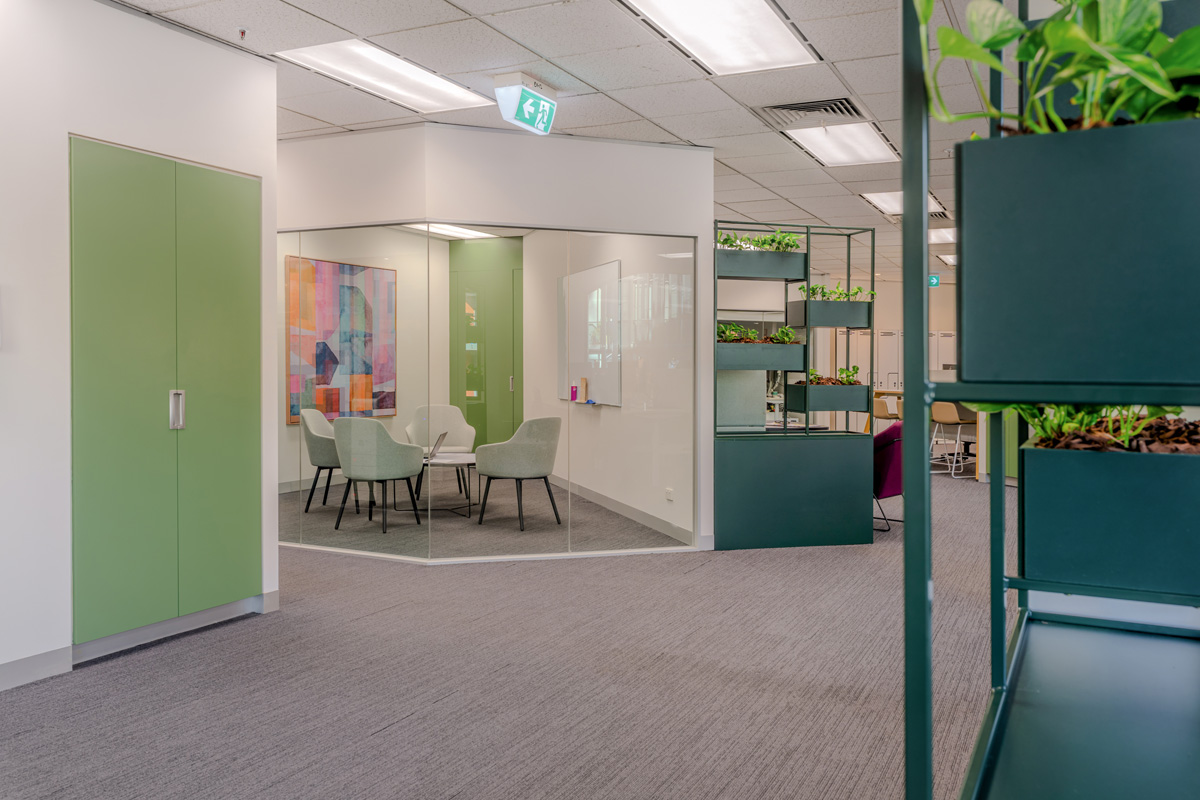
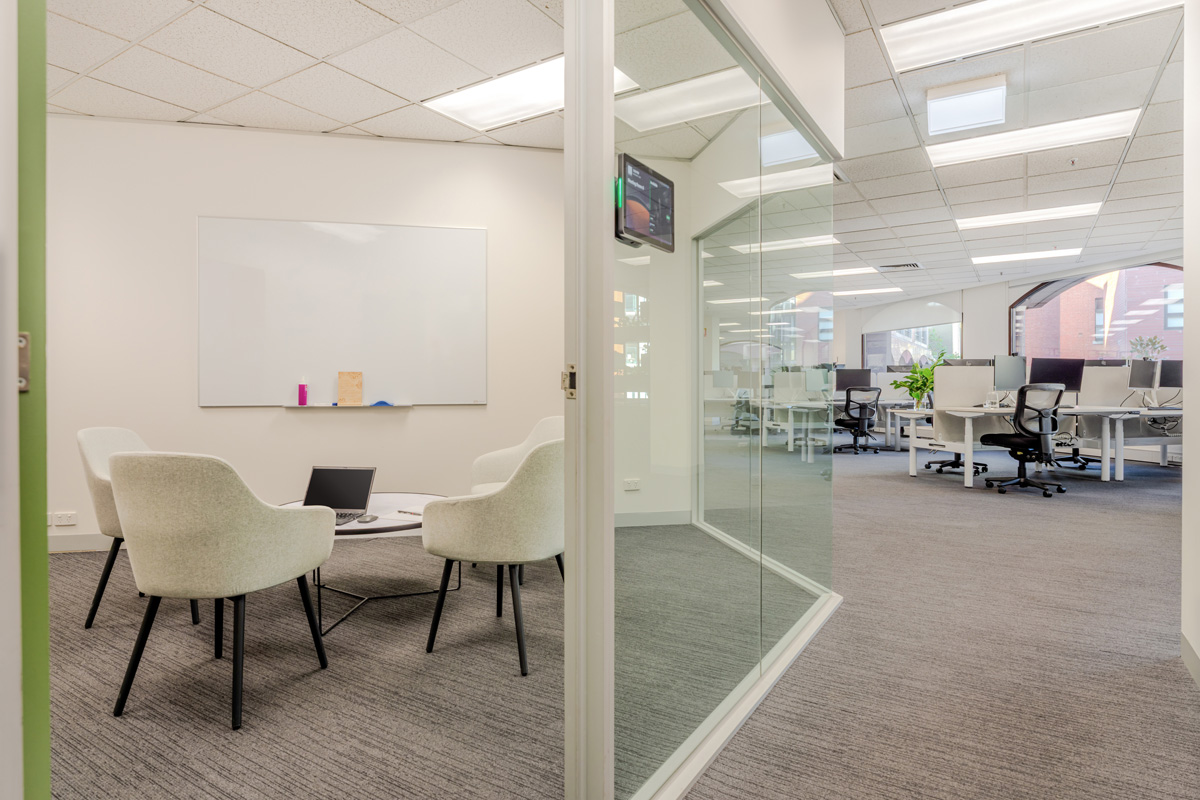
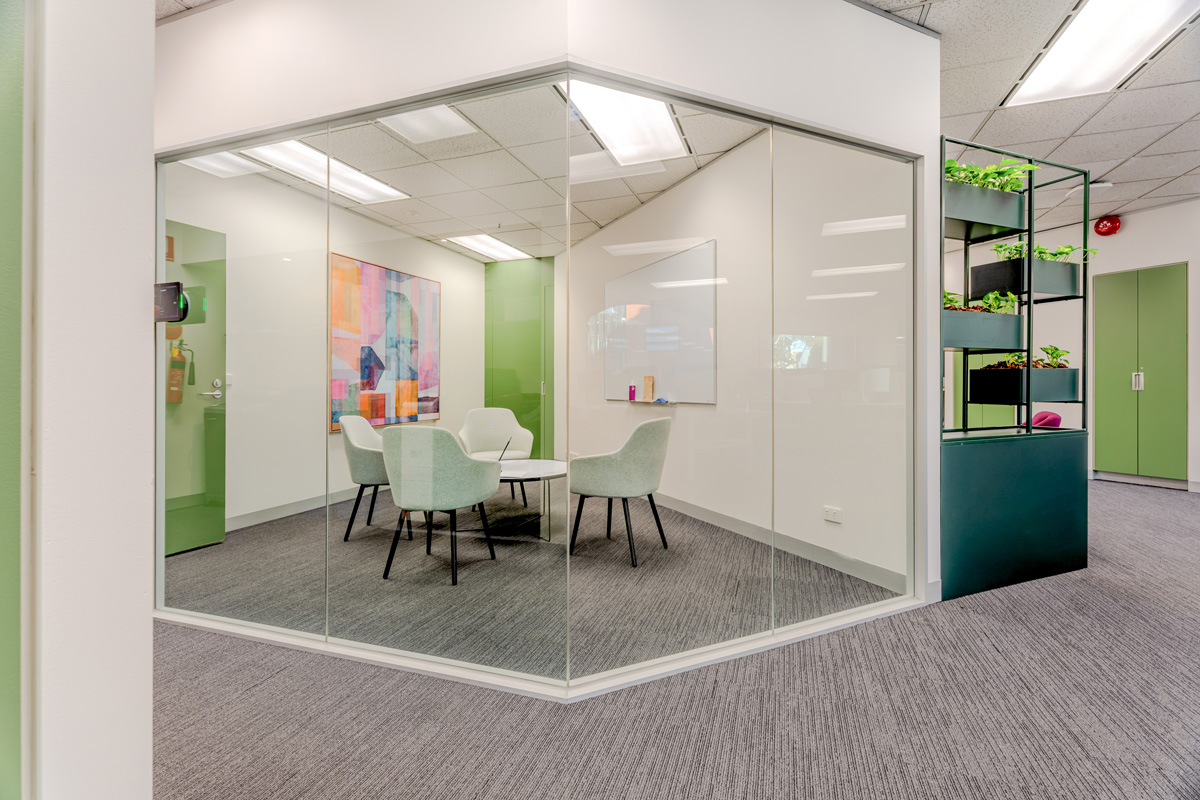
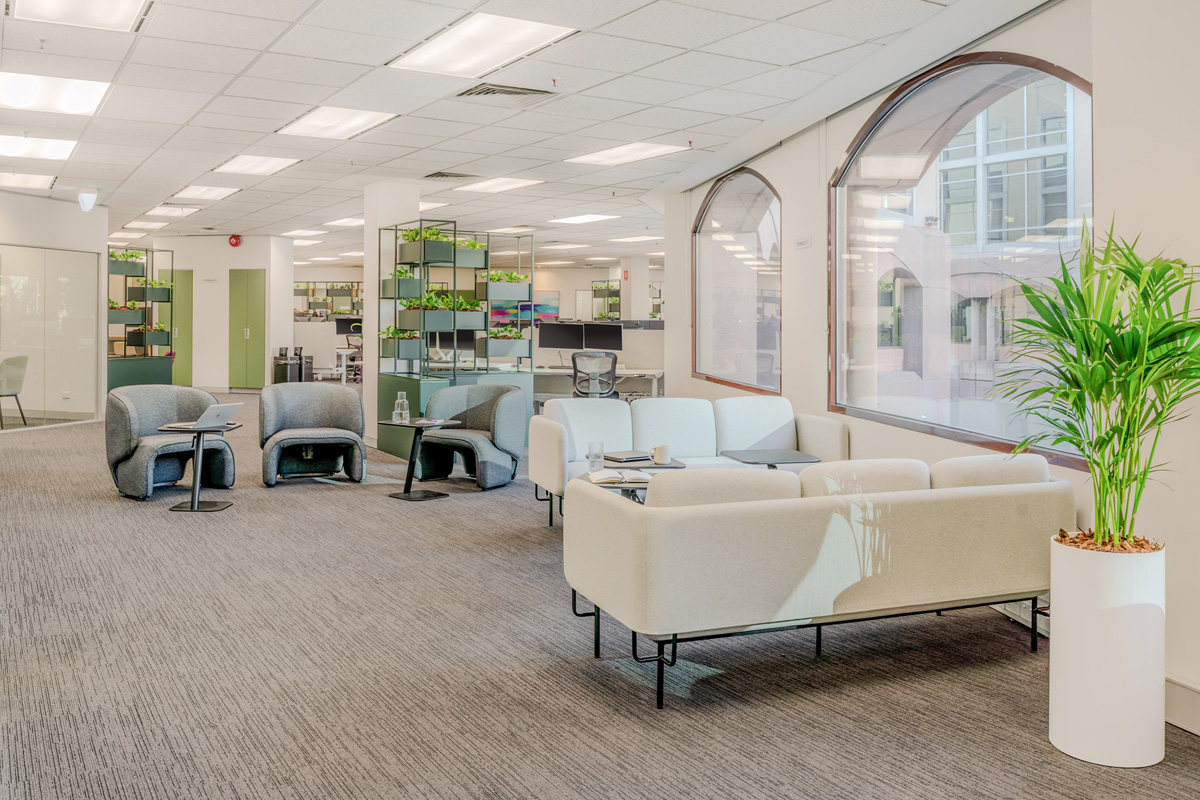
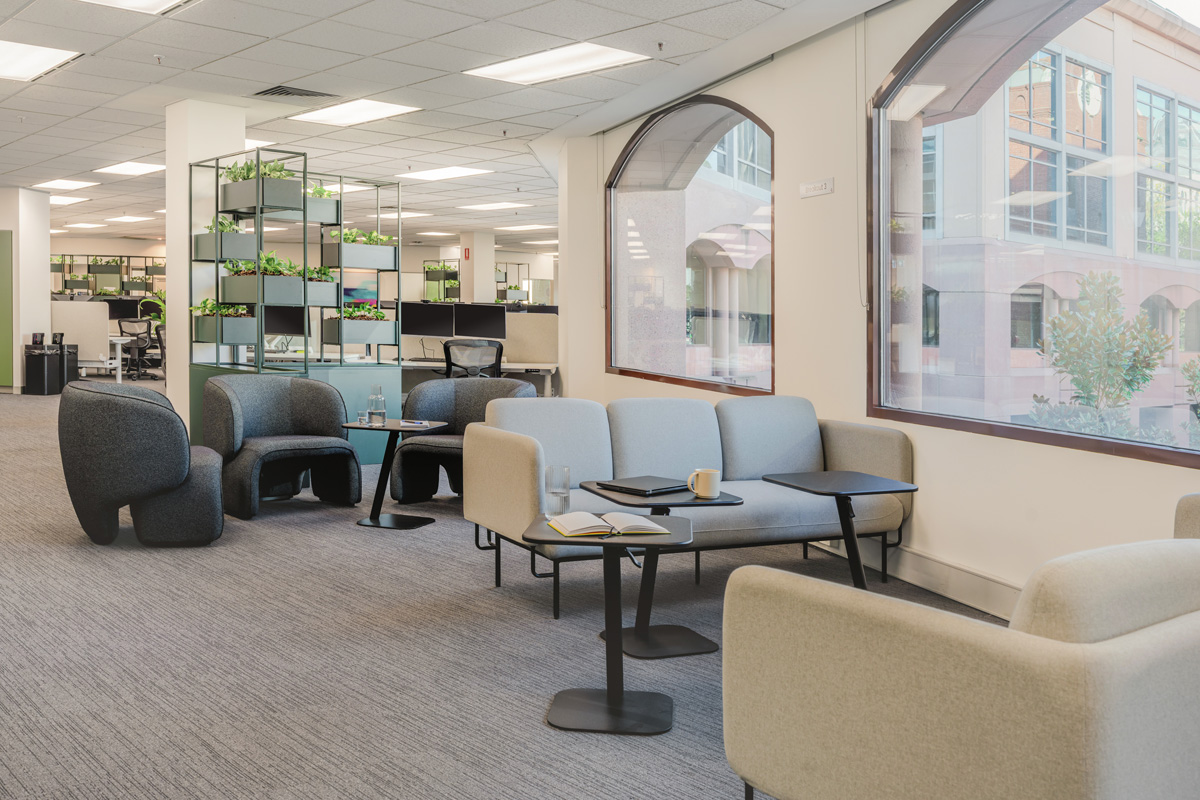
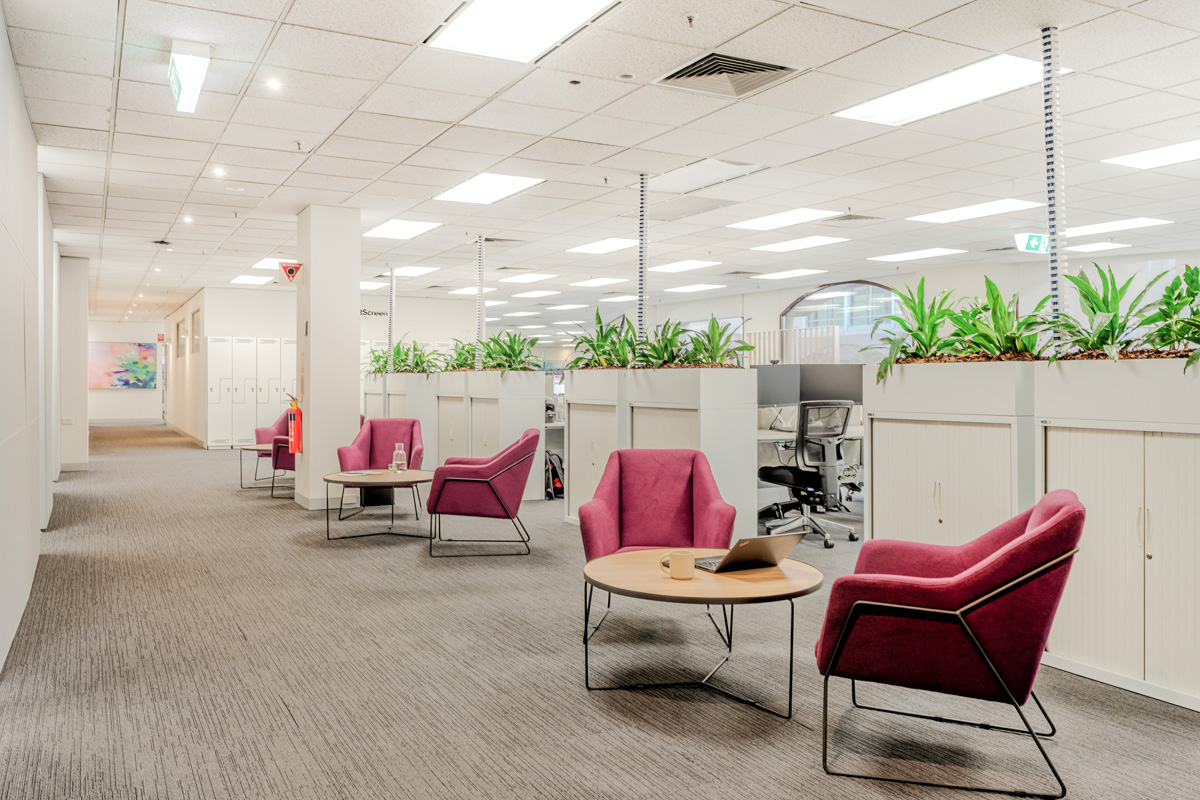
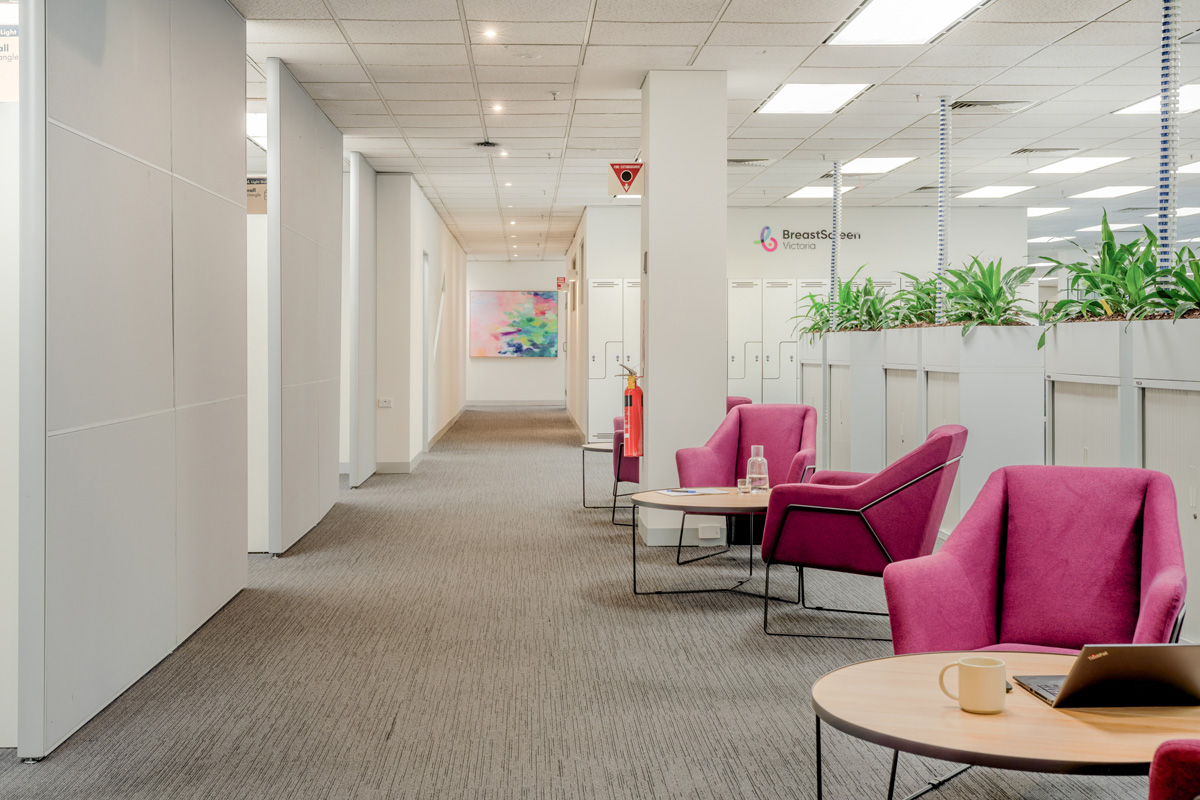
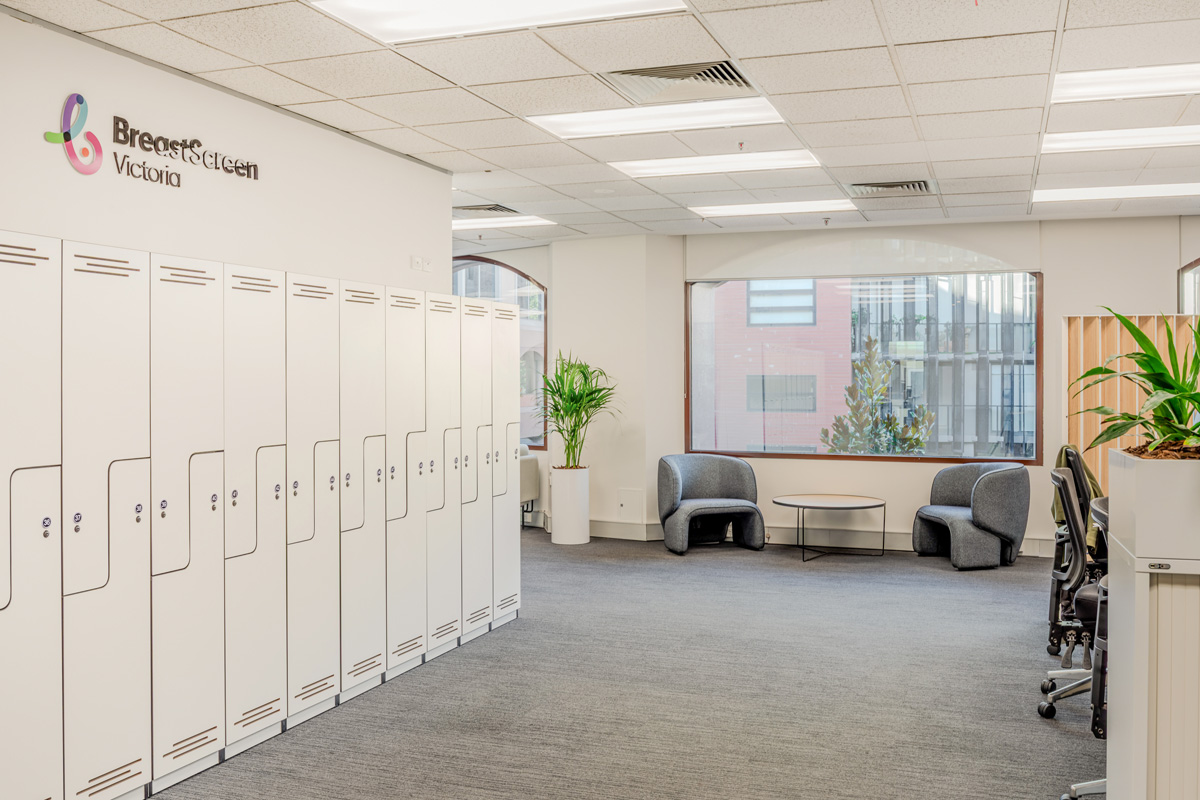
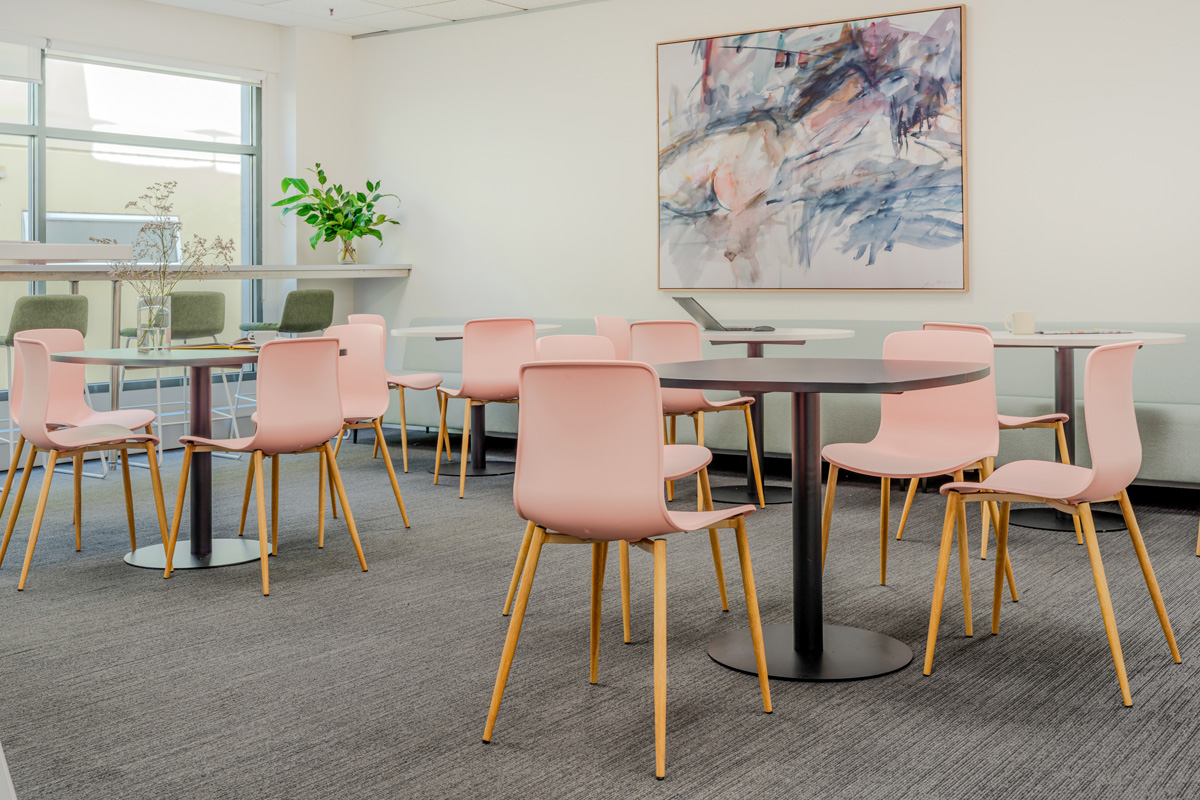
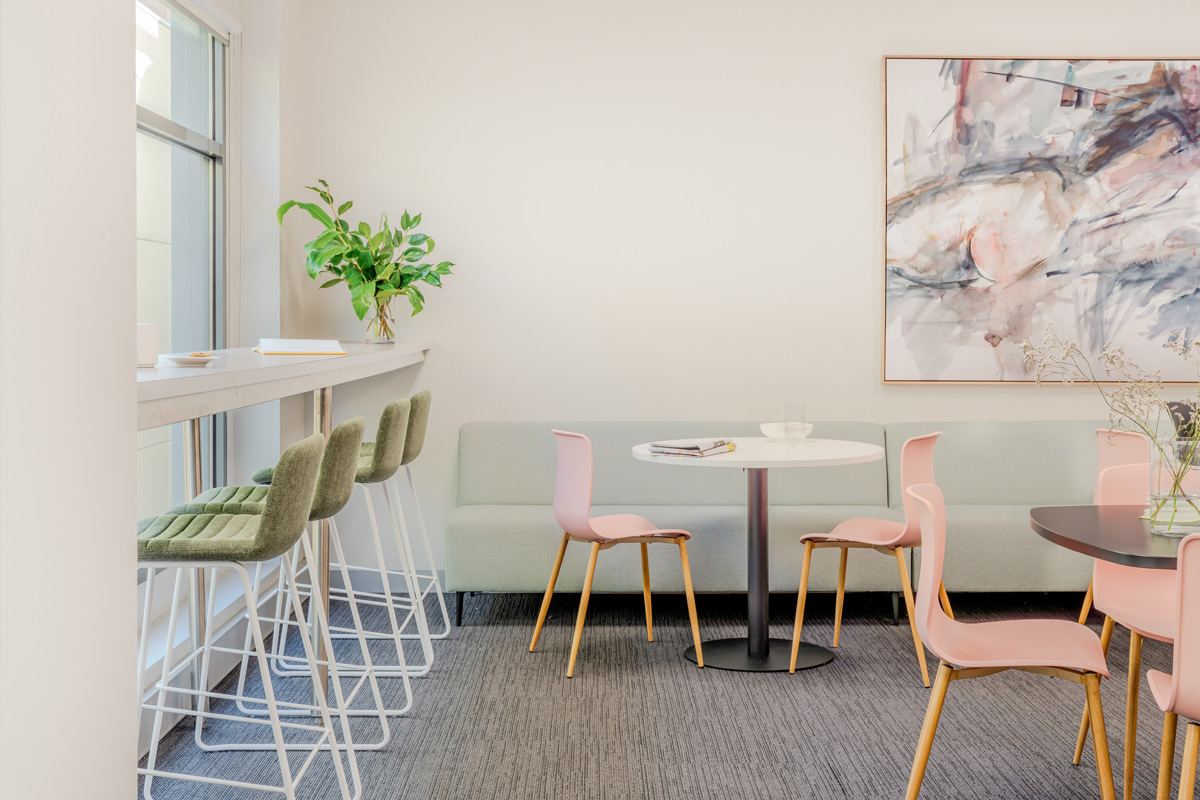
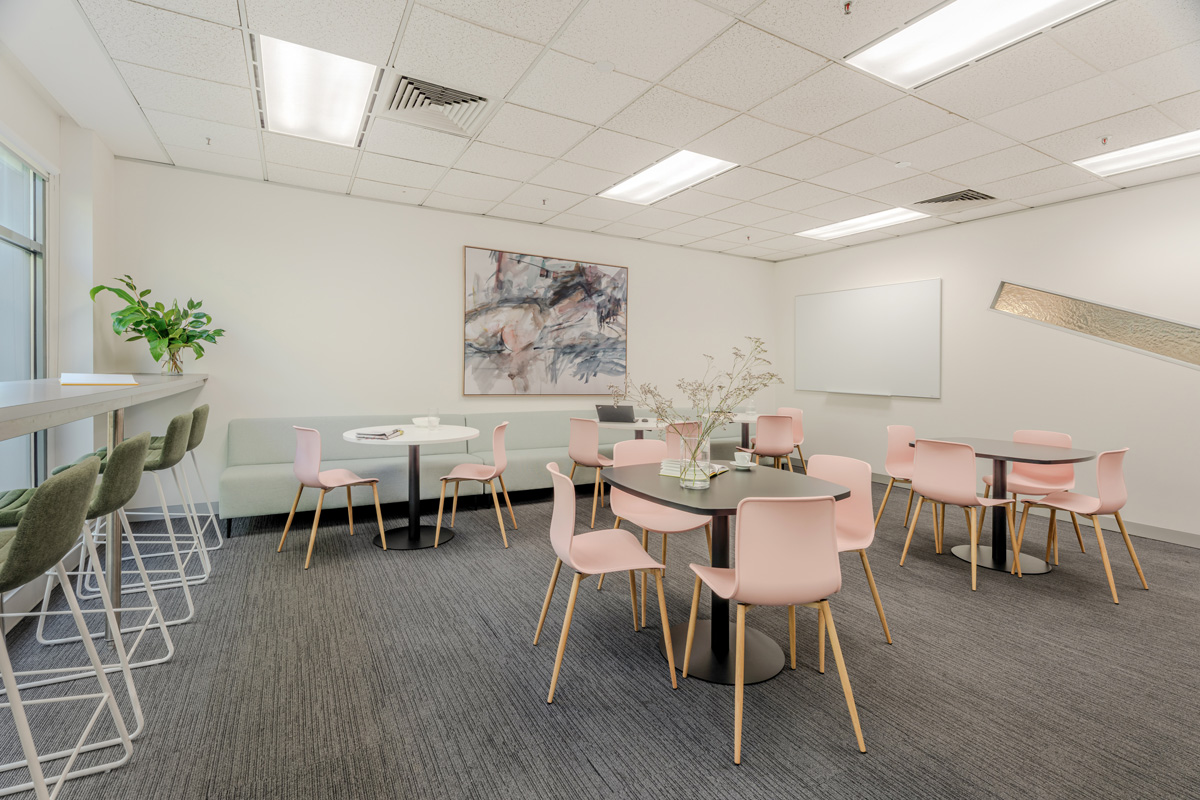
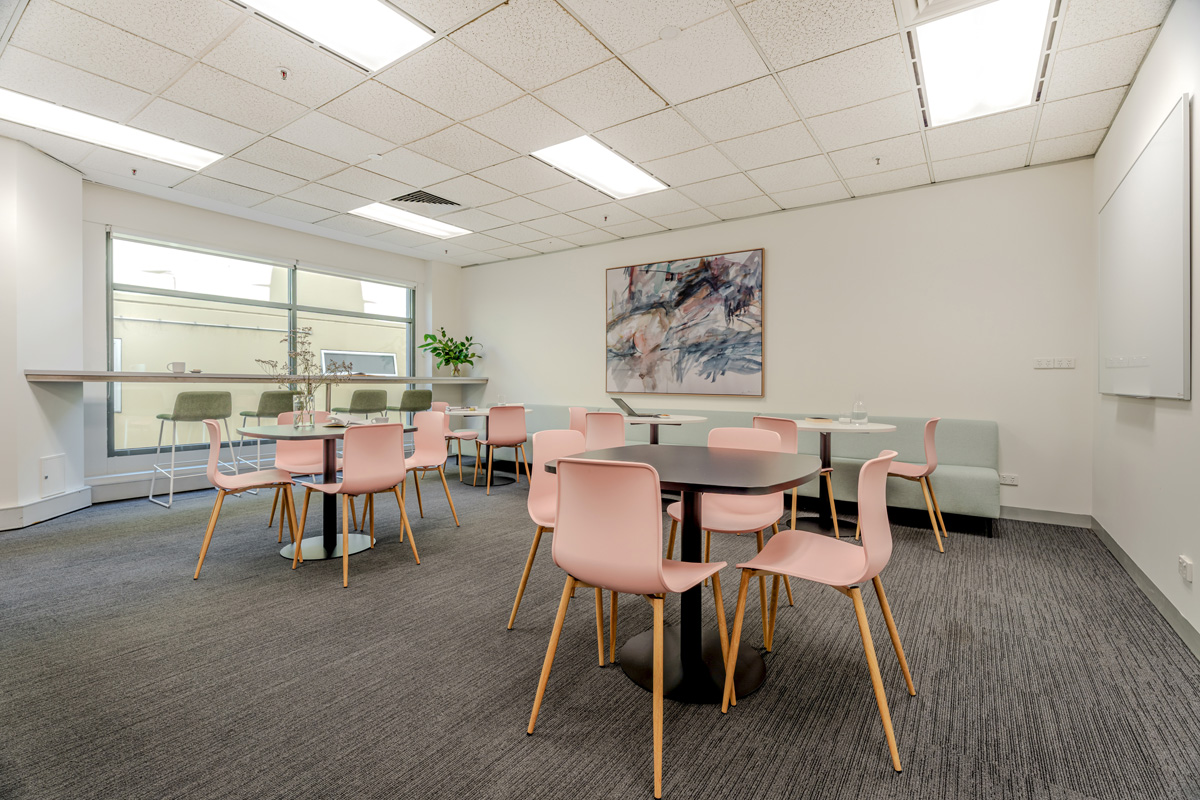
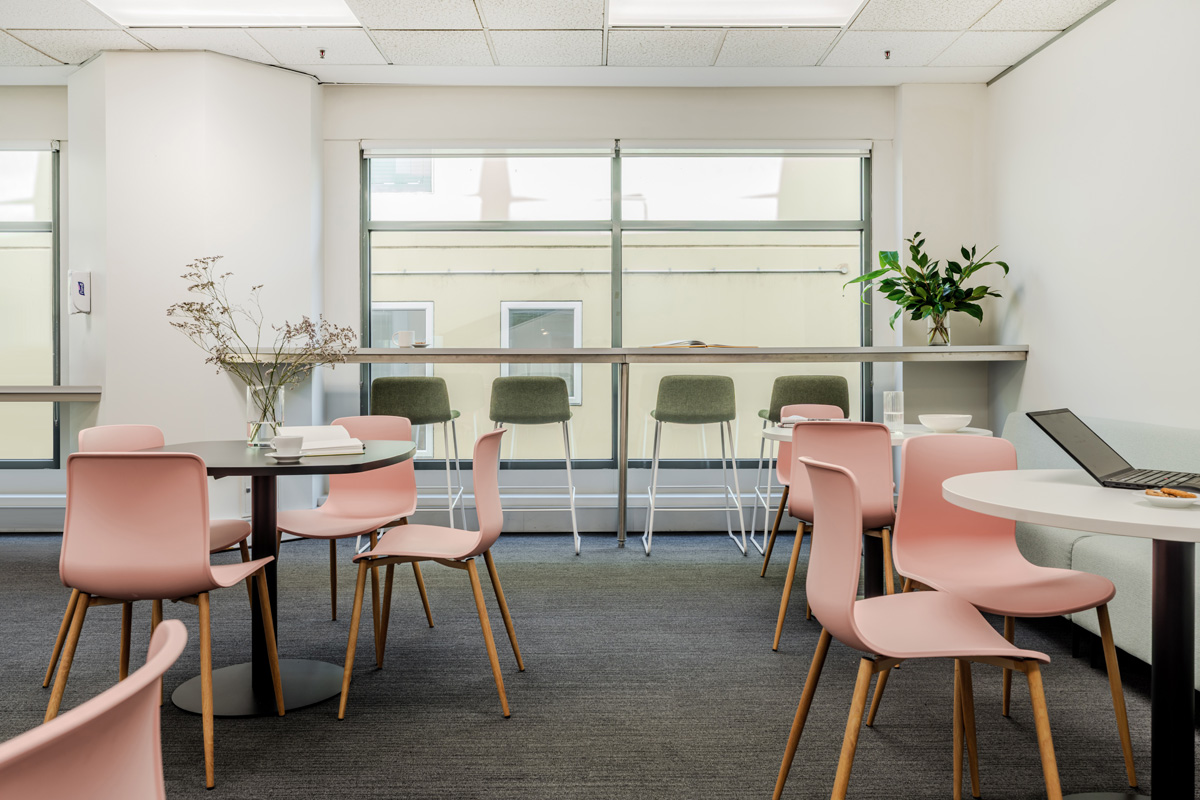
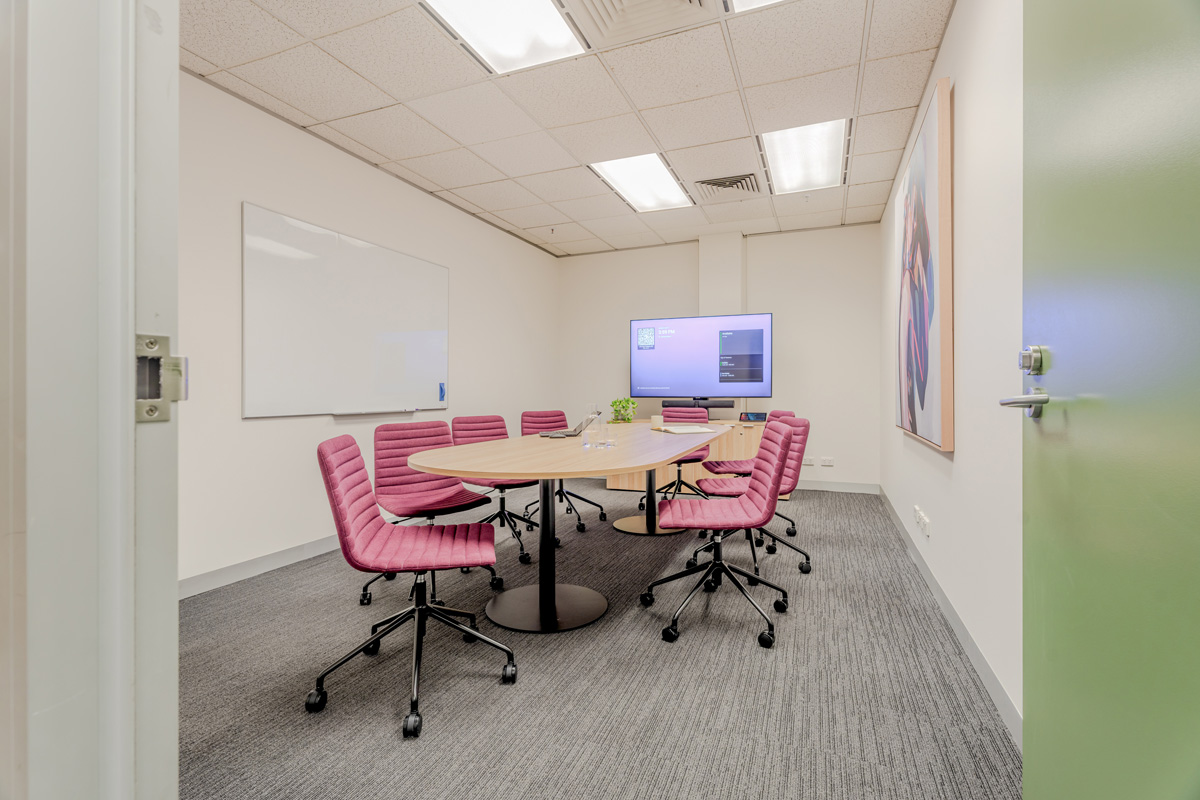
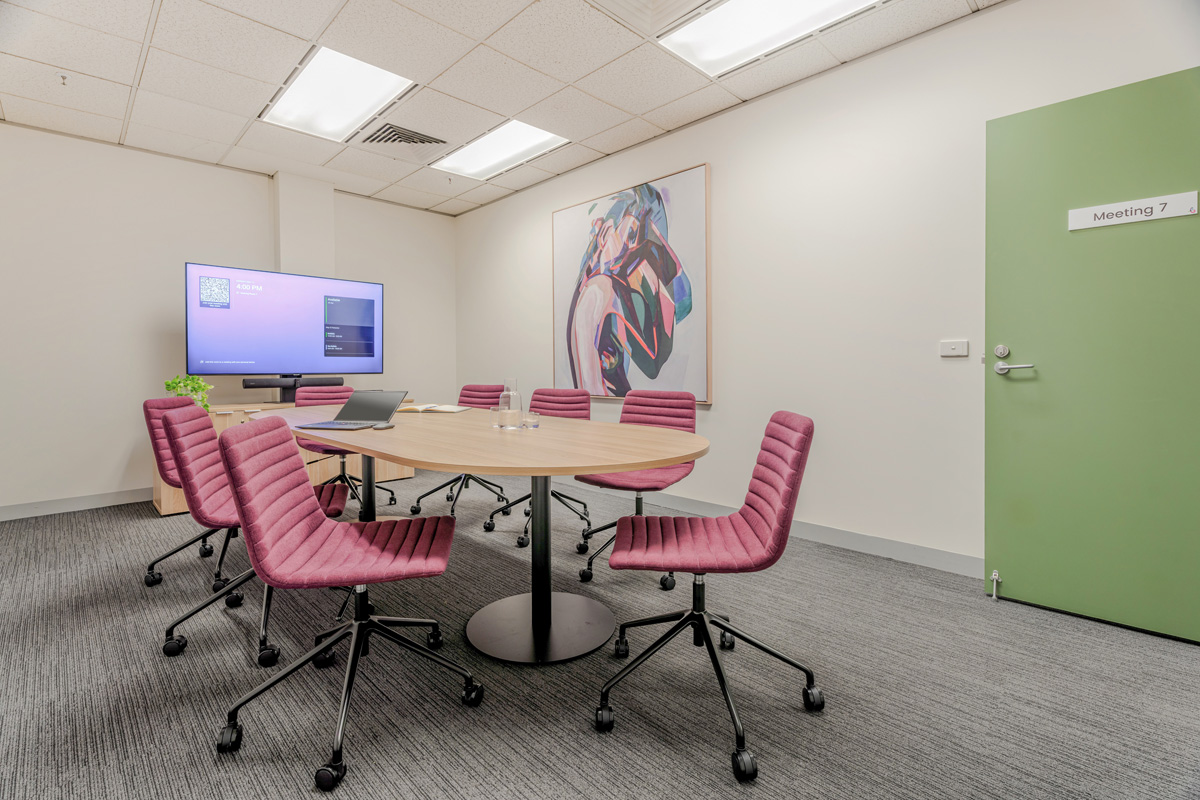
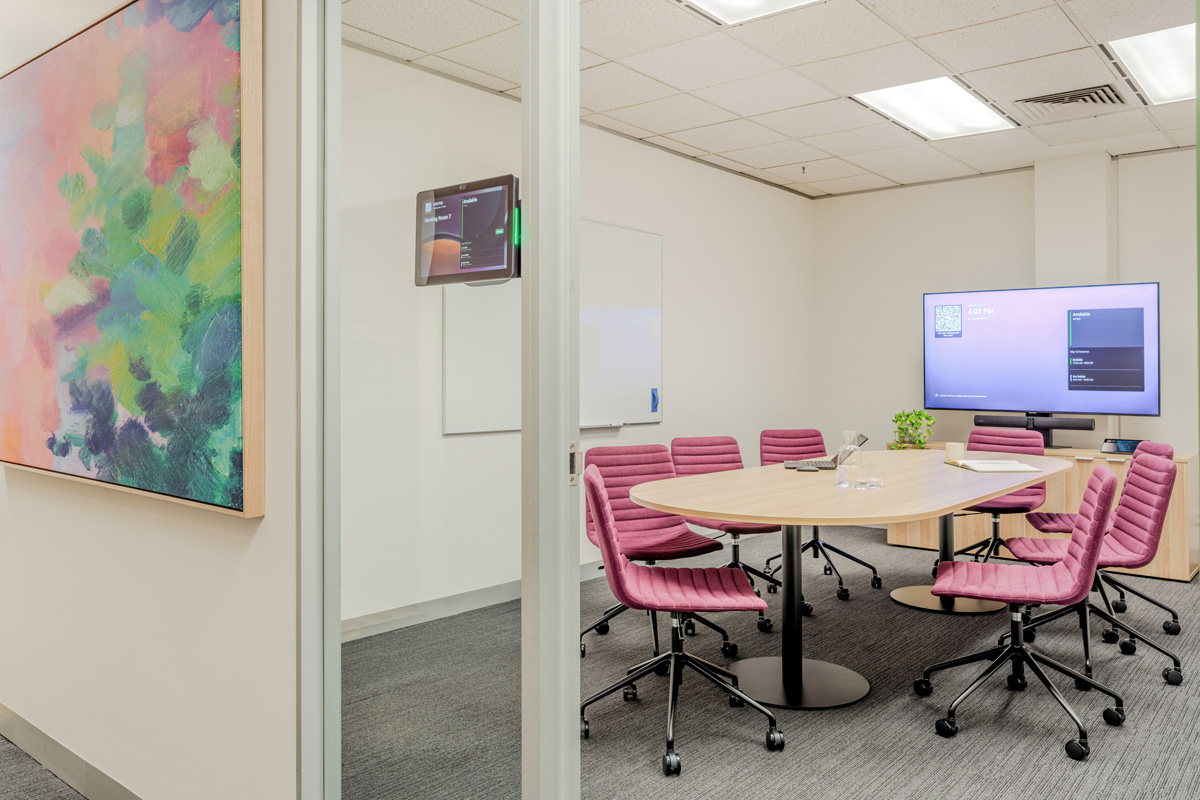
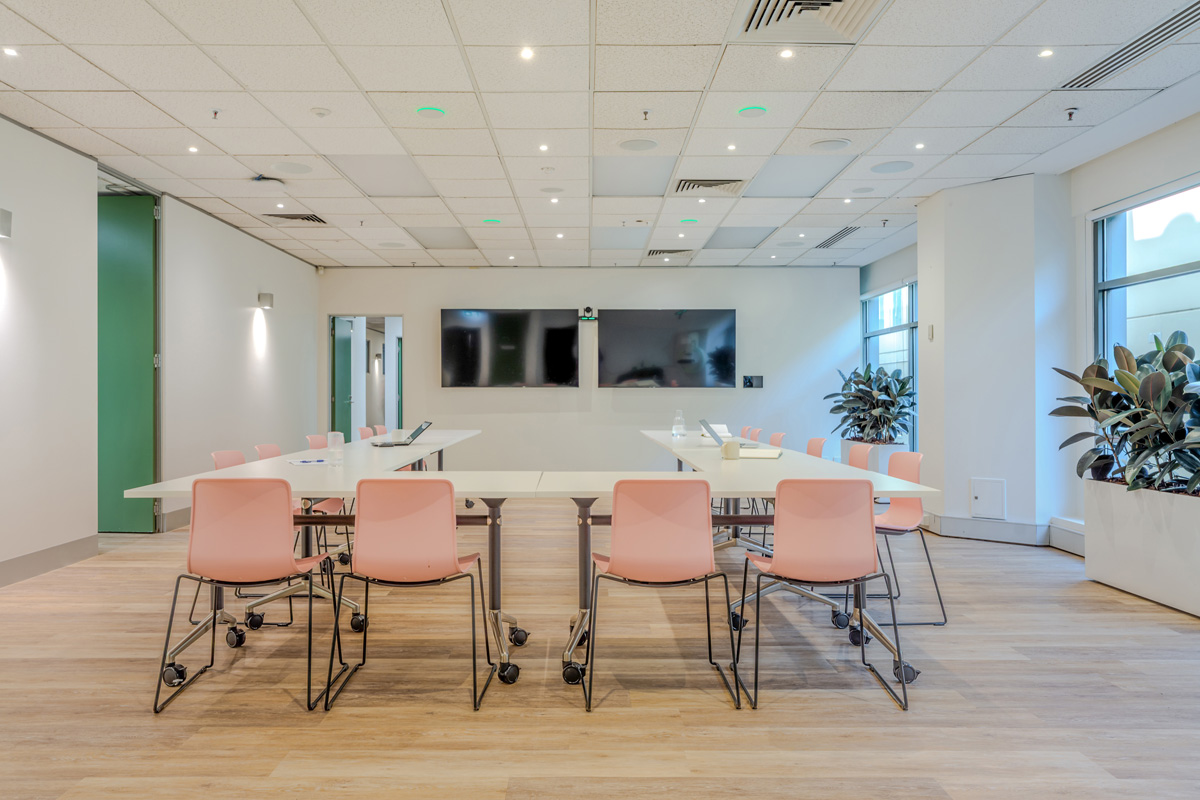
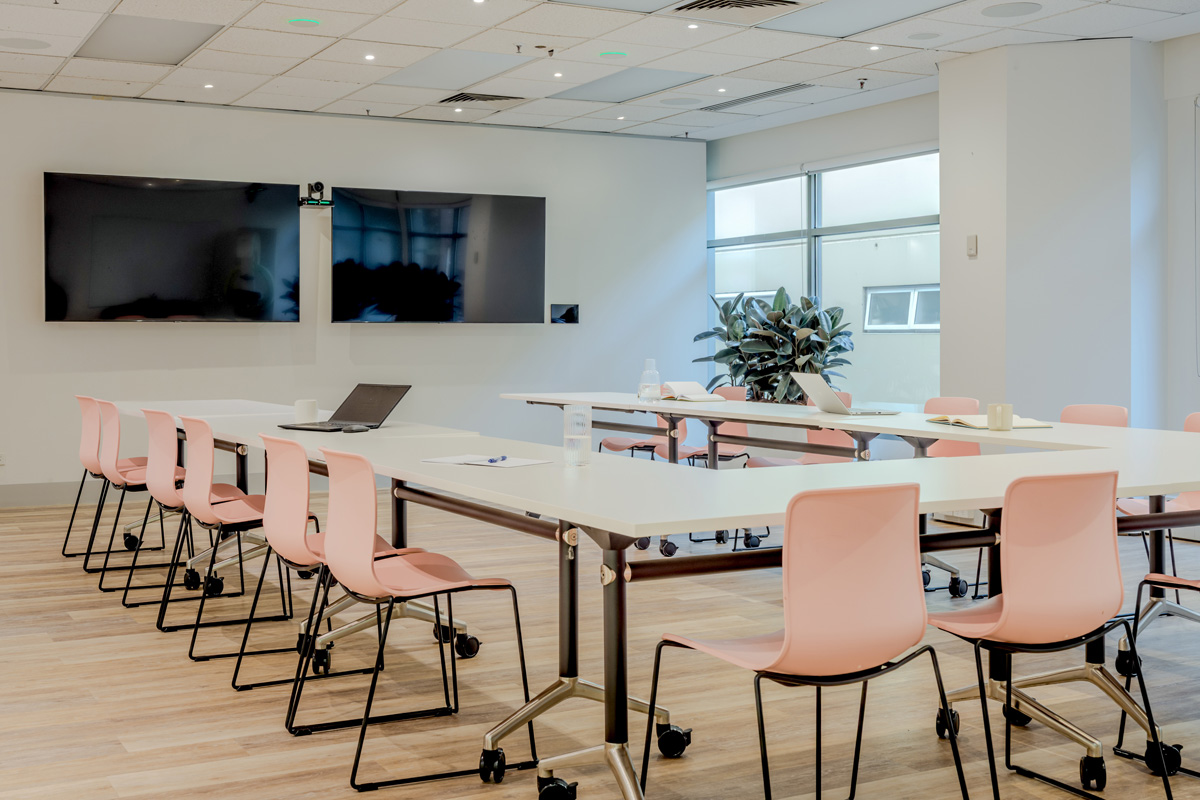
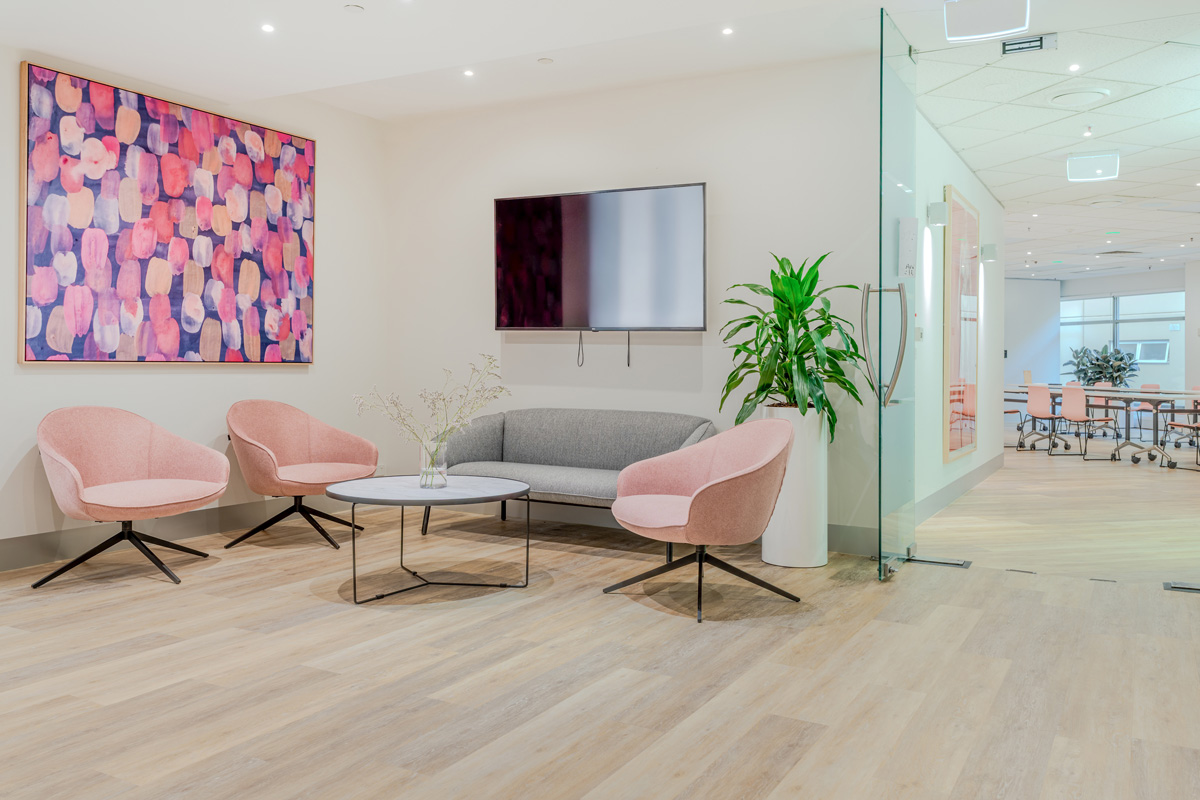
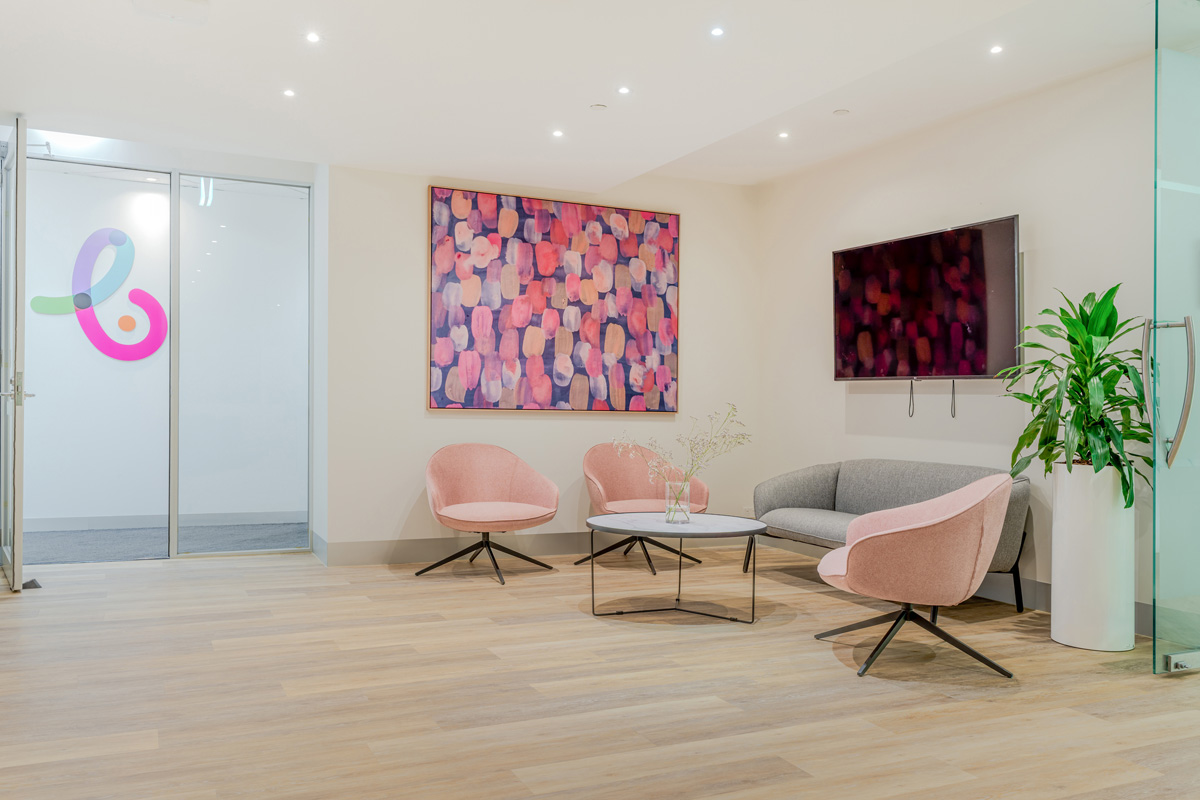
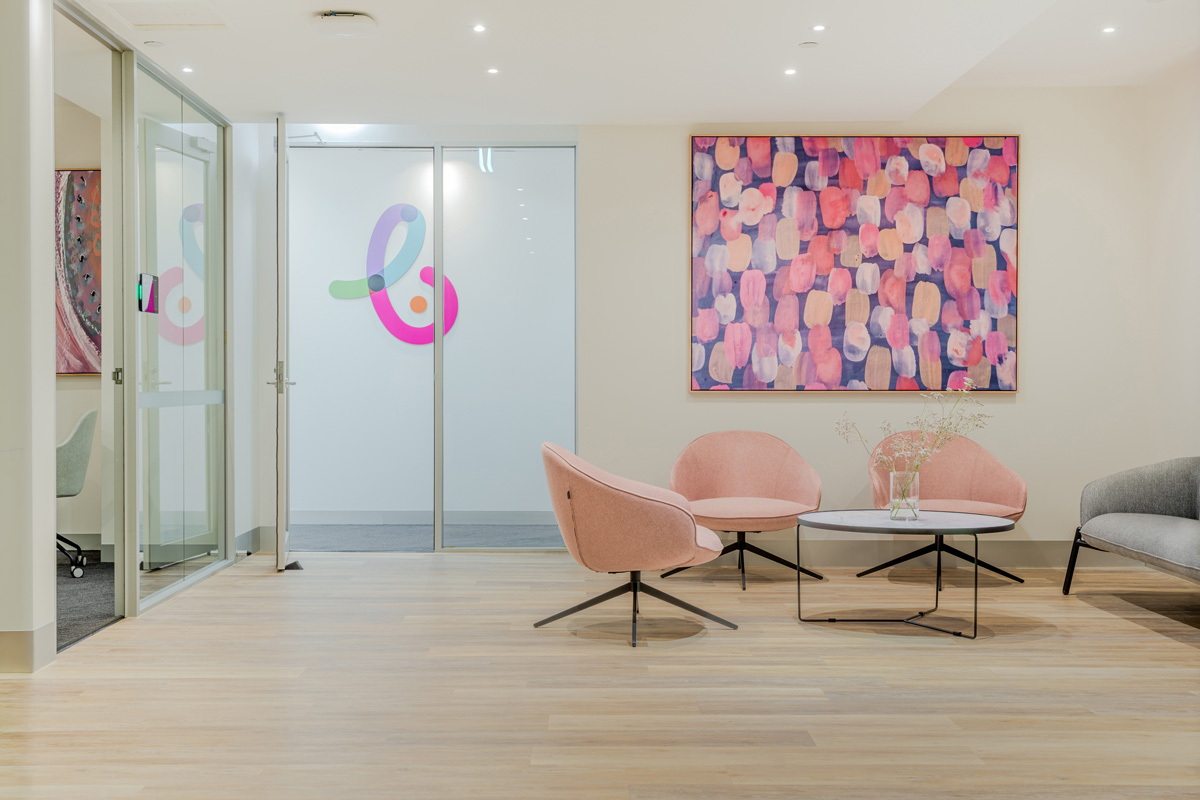
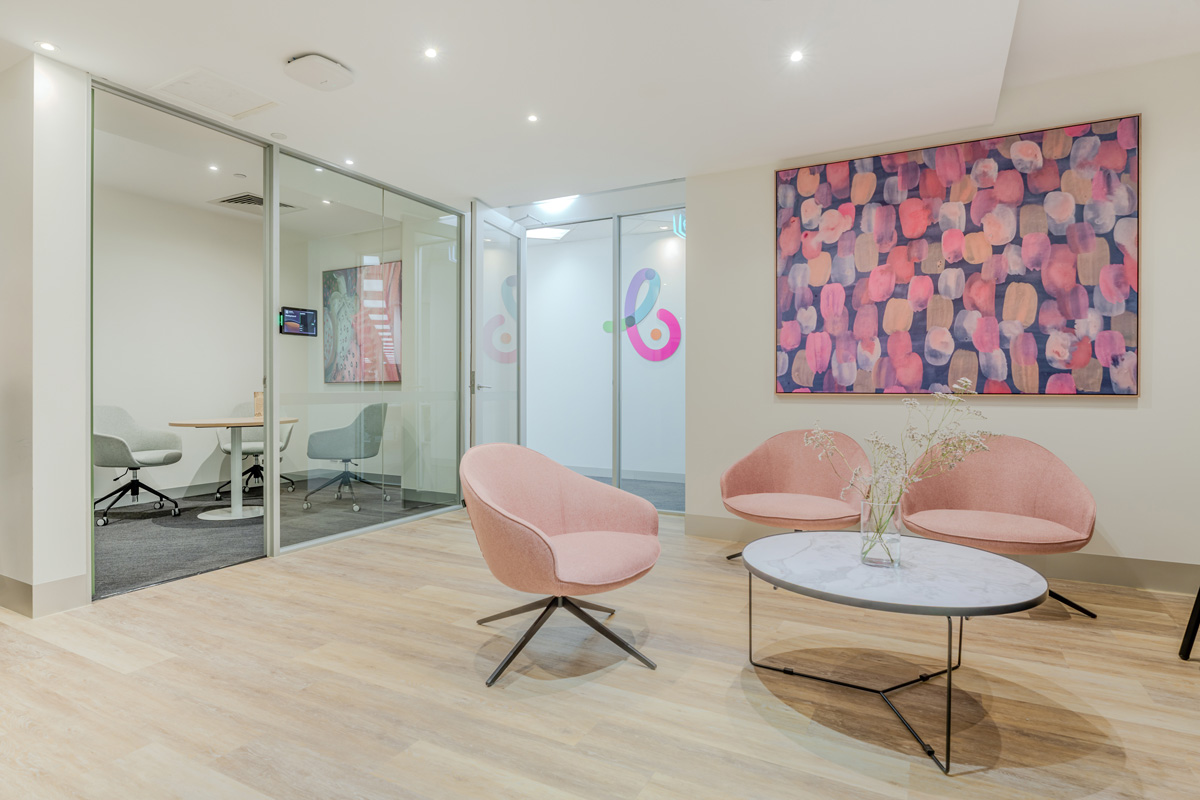
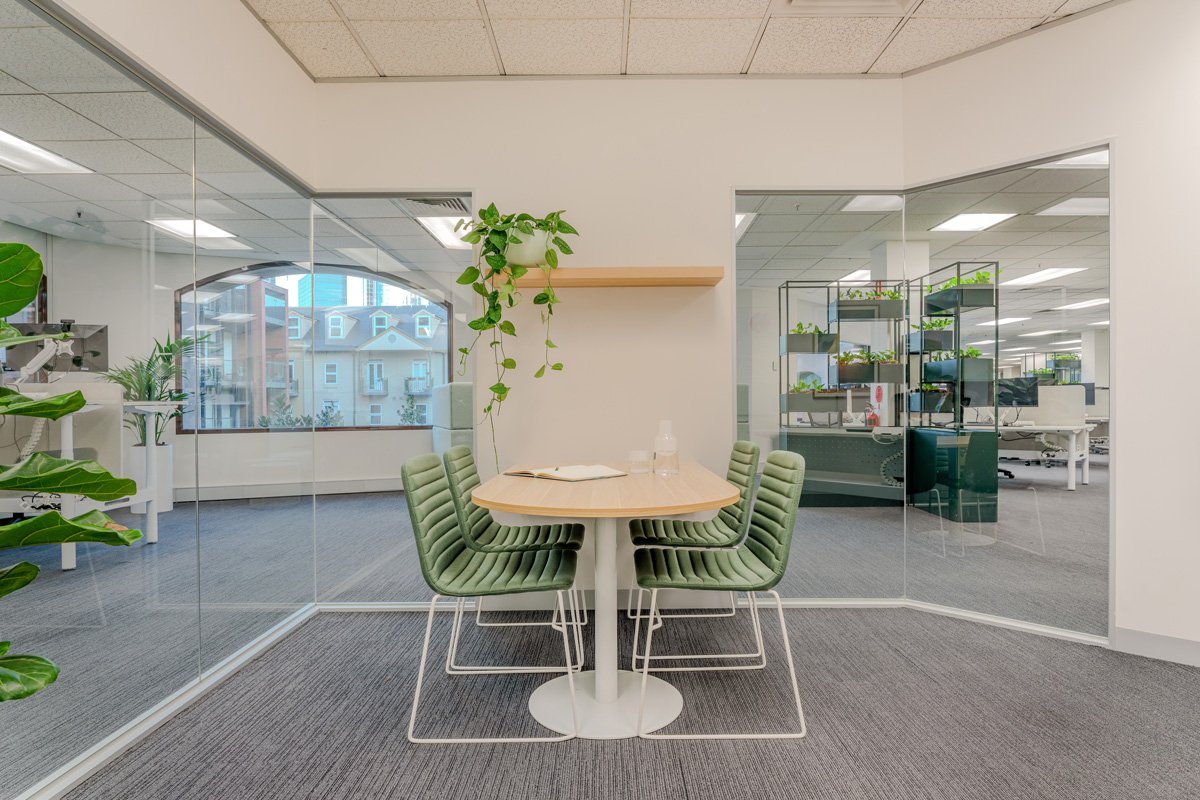
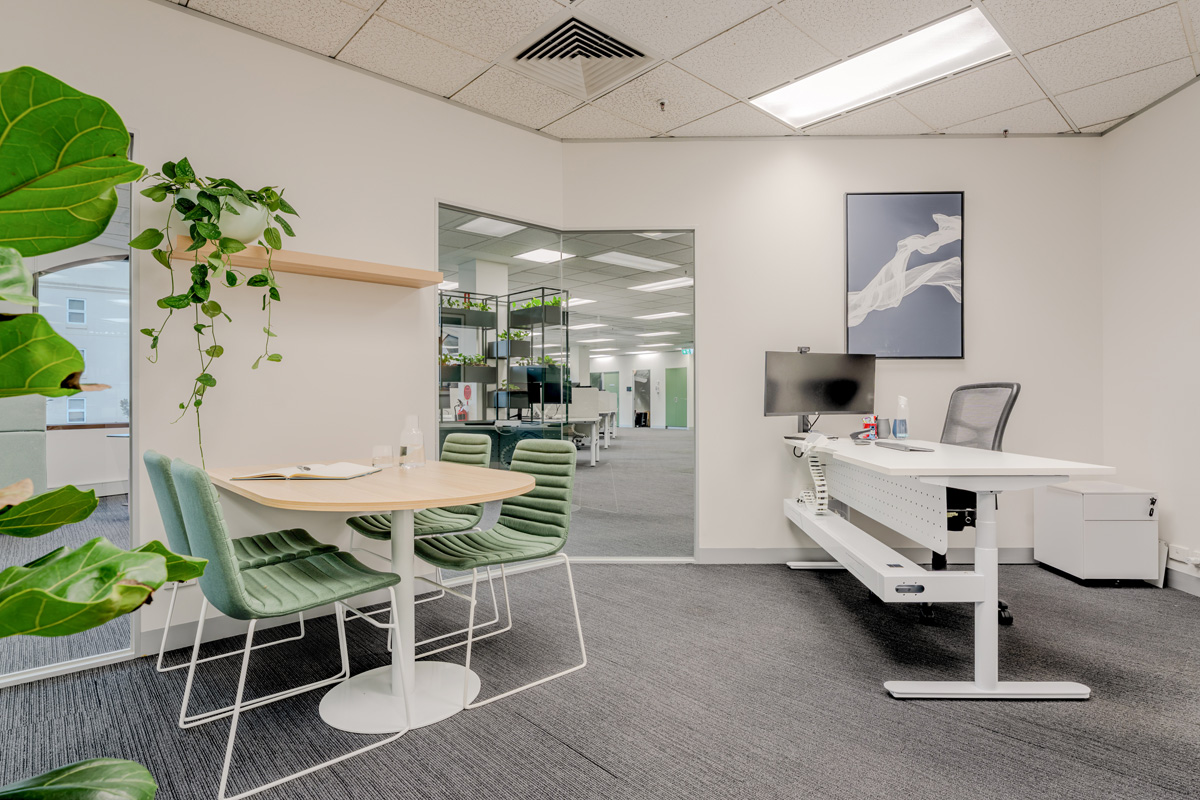
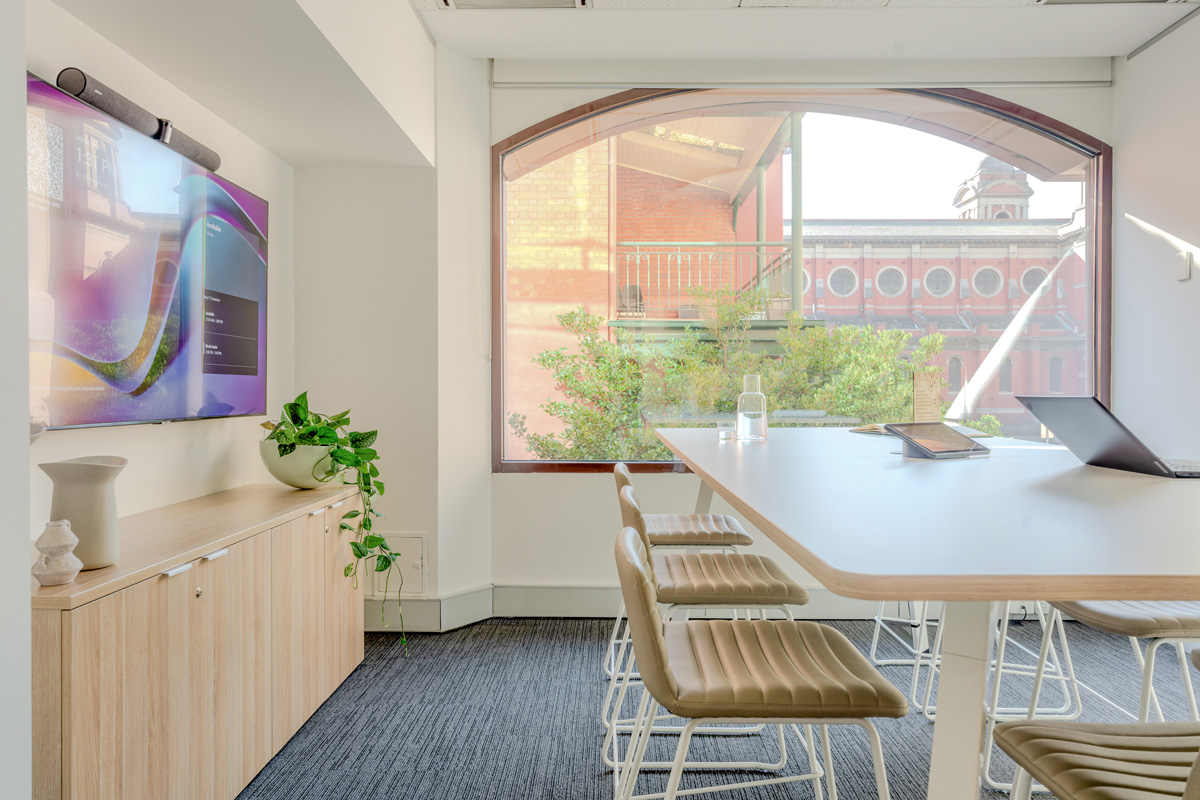
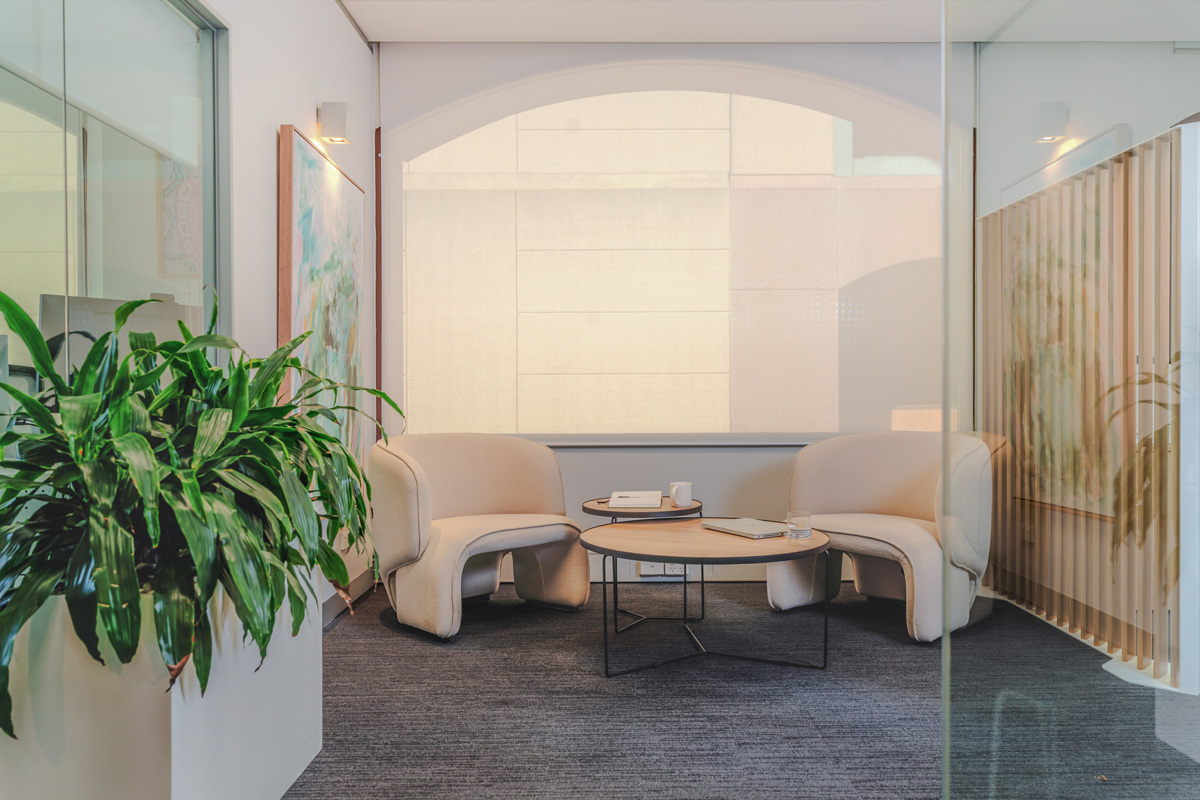
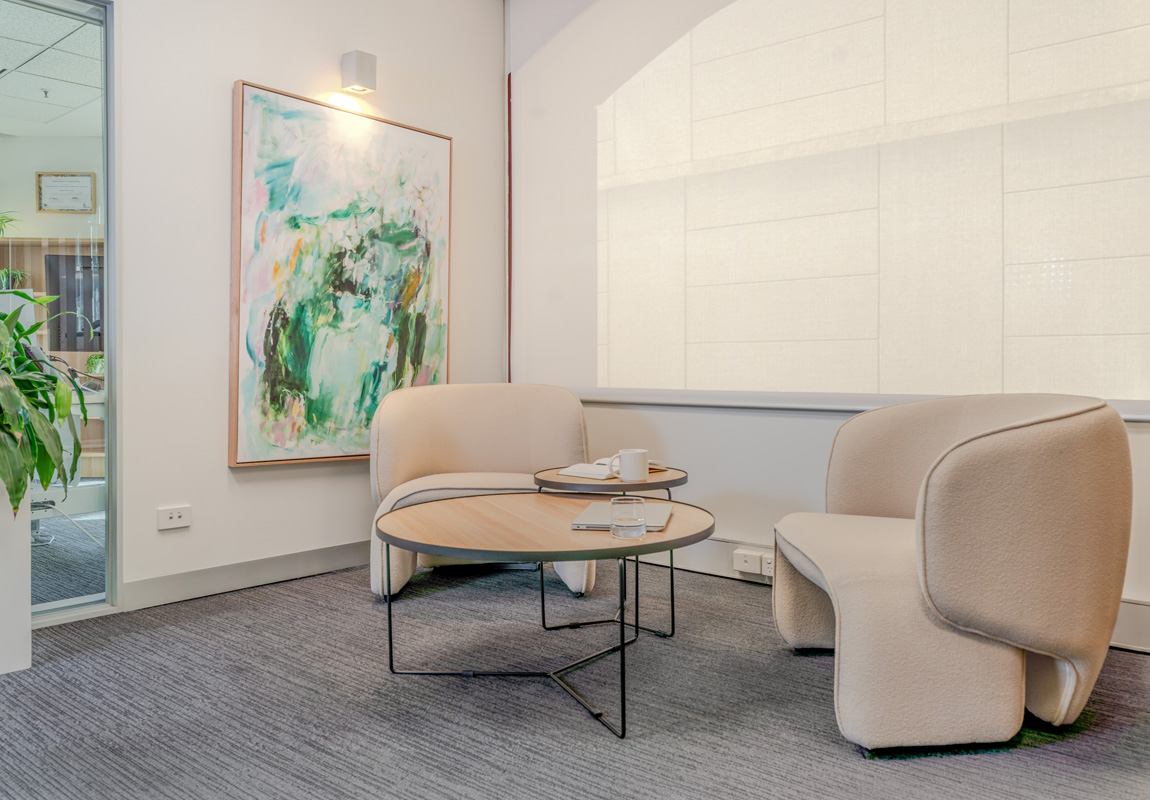
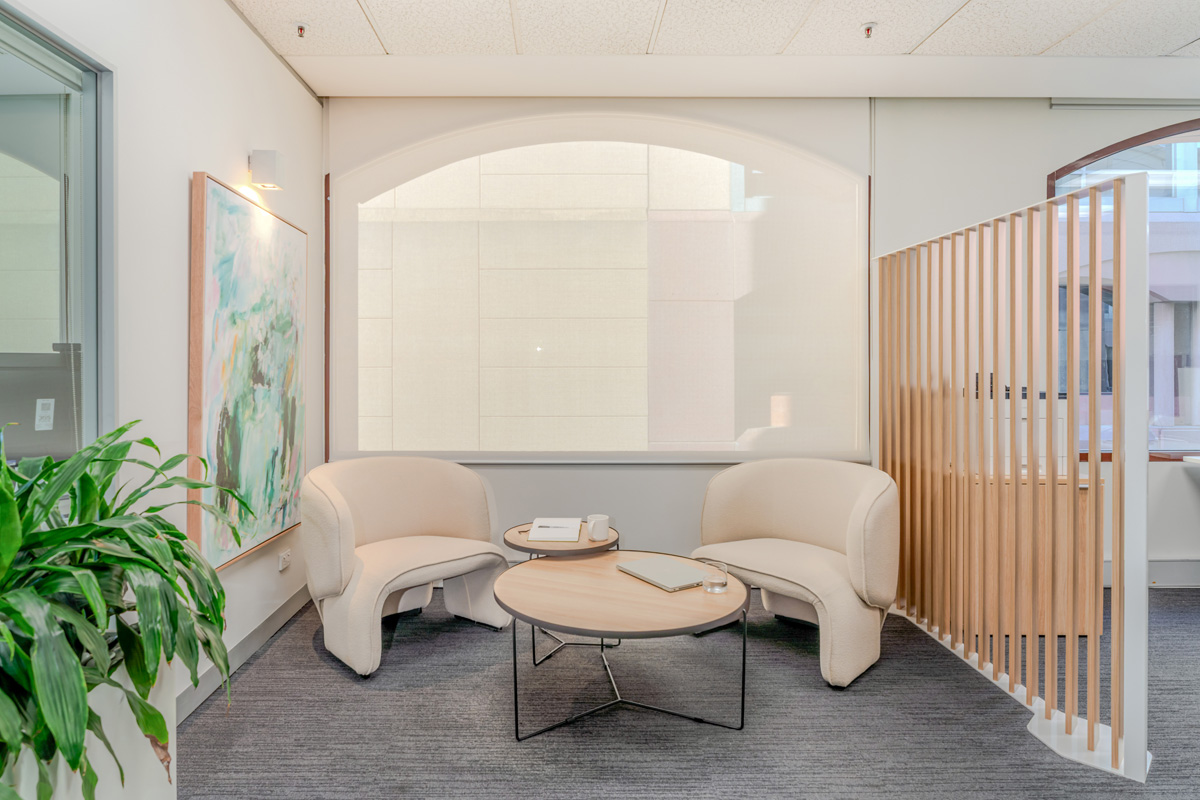
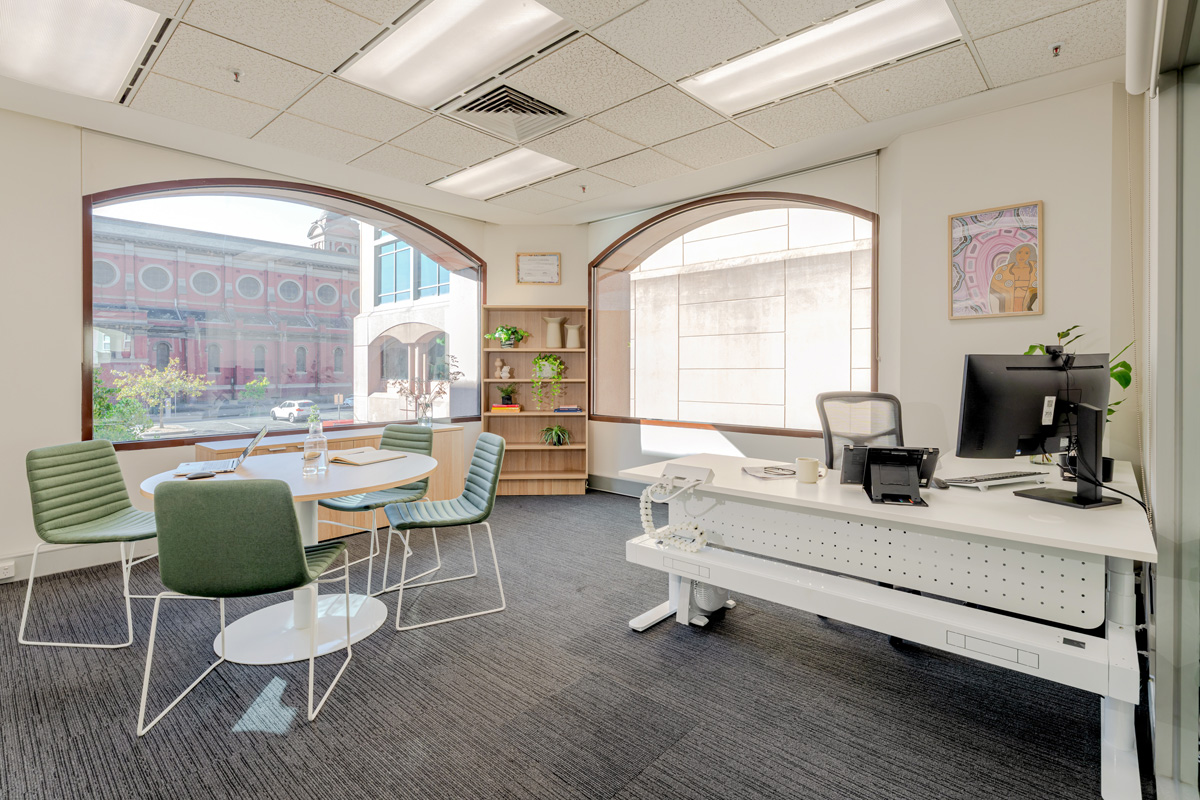
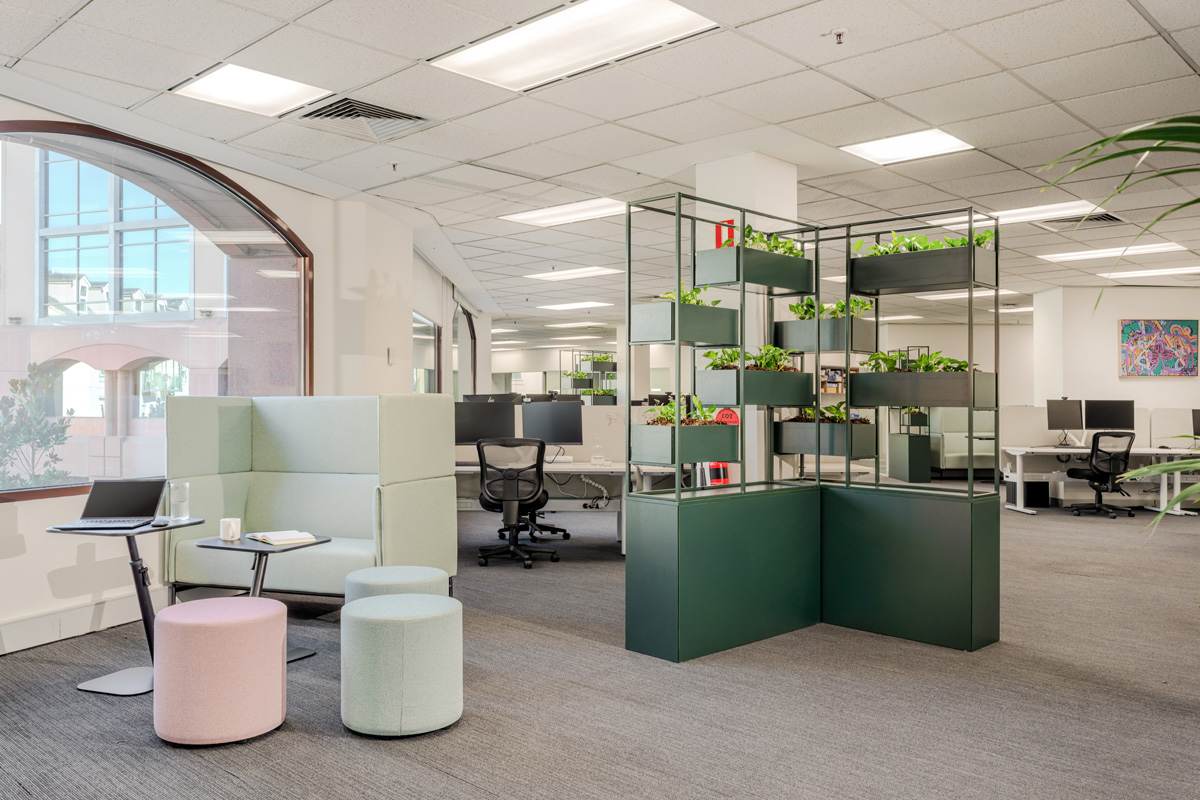
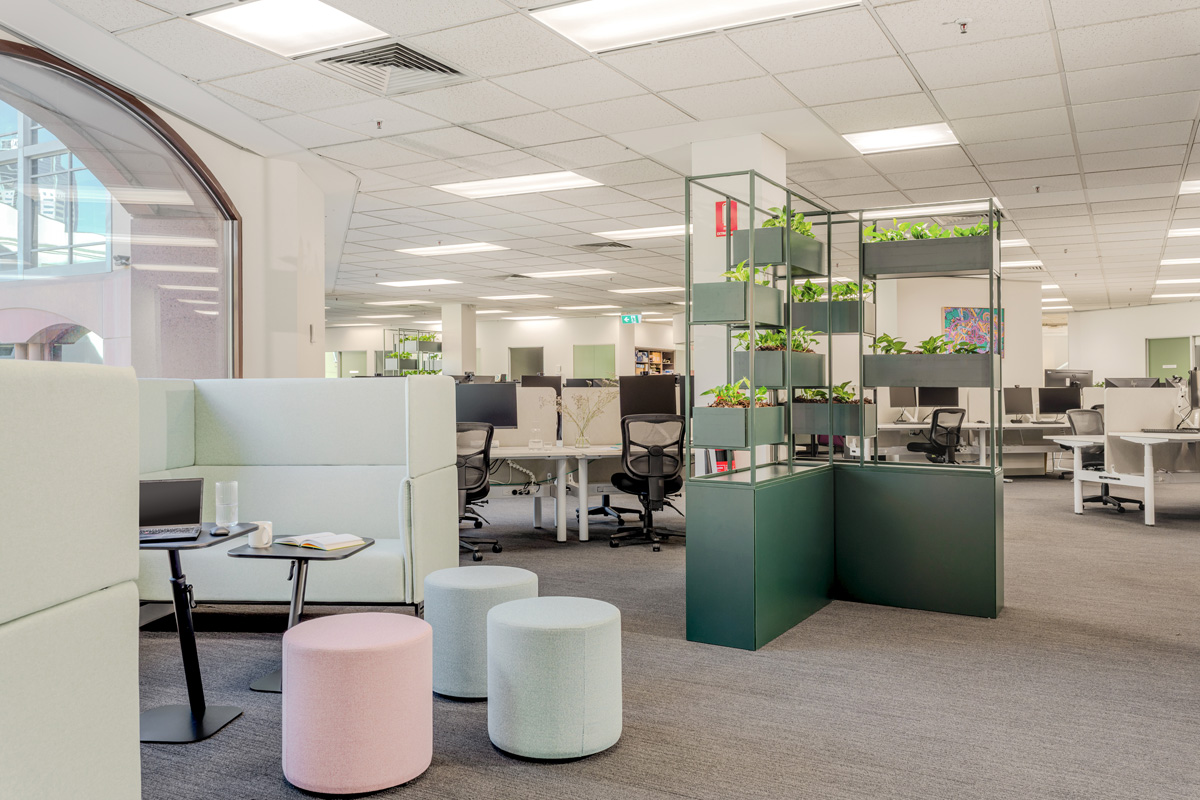
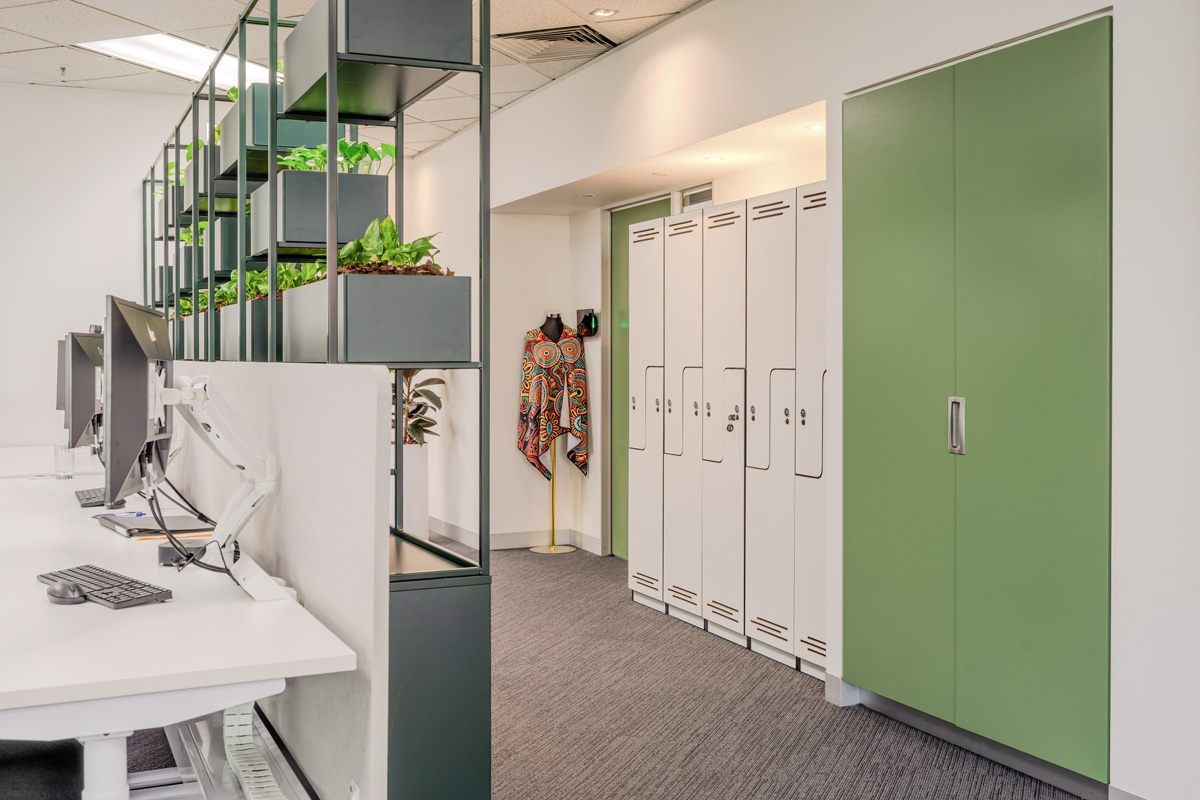
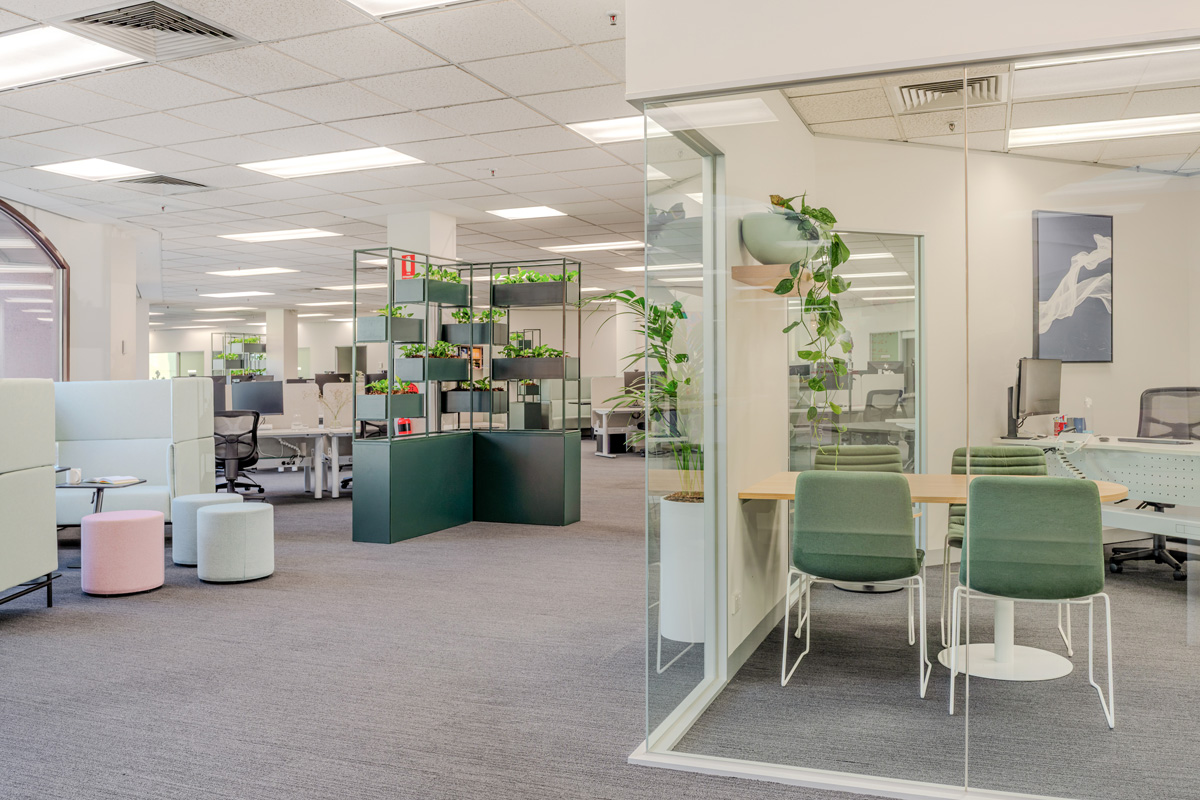
Spanning the reception area, offices, meeting rooms, informal breakout and collaboration areas, the kitchen and training room, the transformation has delivered a fundamentally different kind of workplace for the BreastScreen team. Five tech-enabled meeting rooms replaced the previous two, each configurable to suit different group sizes and meeting styles — from hybrid video calls to in-person sessions. Where once only a single room had AV capability, now all five are equipped and in daily use. Fixed desks have given way to a mix of purposeful spaces: sit-stand desks (representing 60% of the total workstation mix), high tables, soft furnishing areas and flexible zones designed to serve different tasks and different moods throughout the day. The removal of bulky, underutilised furniture opened the floor plan considerably, creating a lighter, more welcoming environment.
“The difference in how people use the space now versus before is hard to overstate. The meeting rooms alone have changed how we connect as a team – and that flow-on effect to collaboration and culture is tangible.”
Luke Neill, Chief Operating & Innovation Officer at BreastScreen Victoria.
The Result.
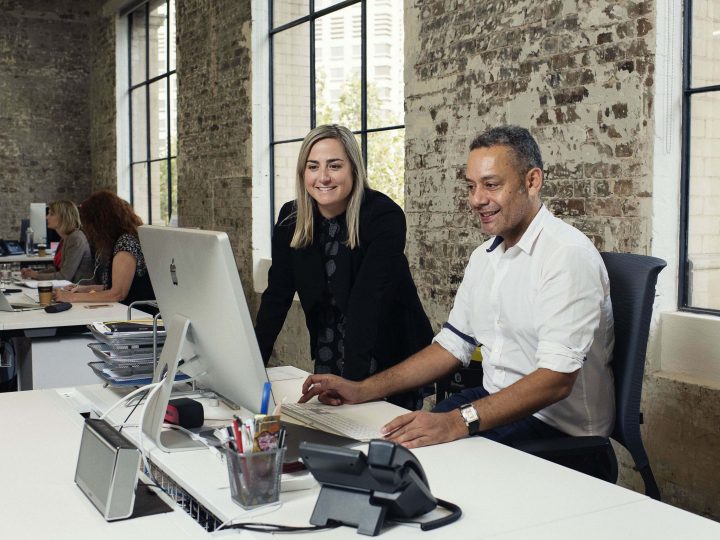
The sceptics have become converts. Post-fit-out feedback has been overwhelmingly positive, with flexible working spaces cited as a genuine driver of productivity. People are no longer anchored to a single spot. They move between zones throughout the day, gravitating toward whatever space suits their task — a sit-stand desk for focused work, a high table for a quick catch-up, a soft seating area for a more informal discussion. The utilisation of these spaces tells a clear story: people are seeking out the intersection of office, home and casual café. The meeting rooms are booked consistently. The sit-stand desks are embraced enthusiastically. And the brighter, more inviting environment has become a genuine drawcard for getting people back into the office. For BreastScreen Victoria, the fit-out wasn’t just a renovation — it was a signal to its team that how they work matters as much as the work they do.